Declaration of War between Japan and Russia
Japan

Political
Global Trade
3 min read
Updated By: History Editorial Network (HEN)
Published:
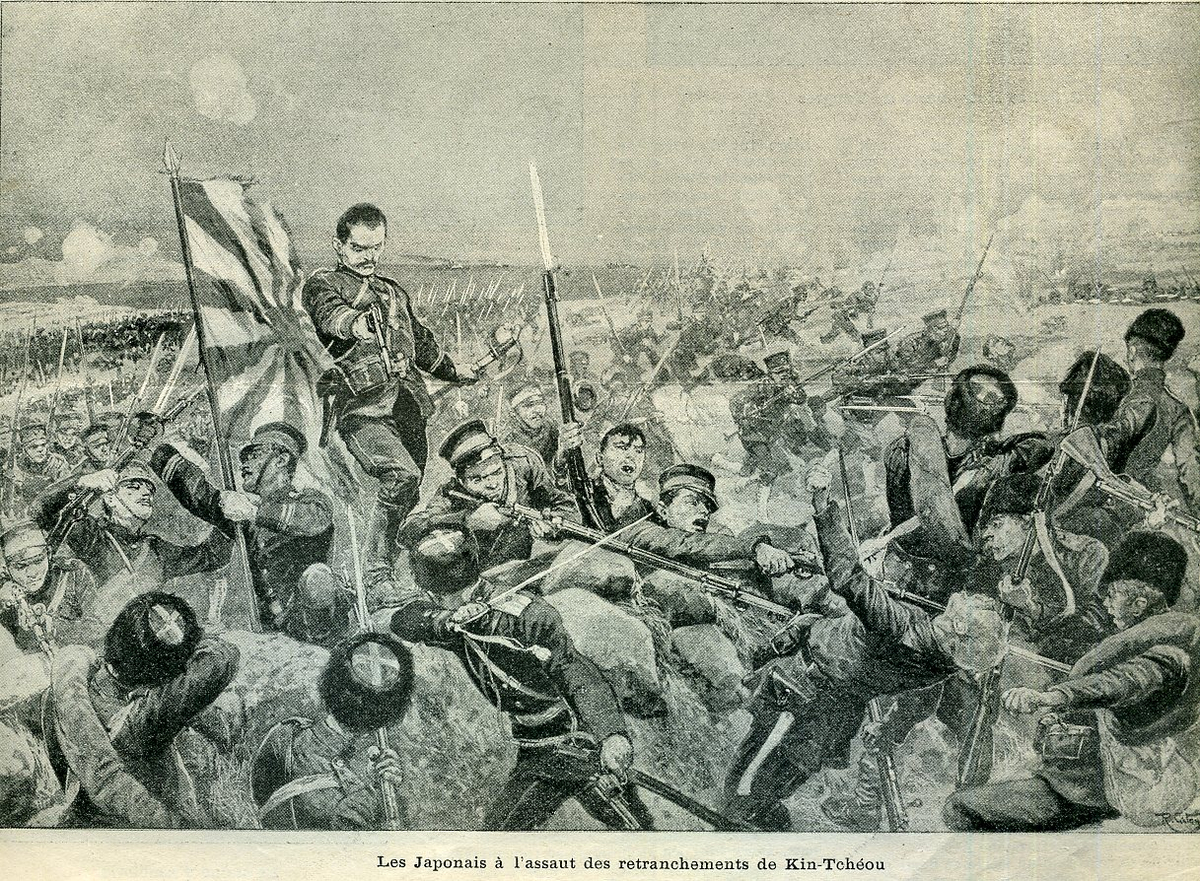
The declaration of war between Japan and Russia marked a significant escalation of tensions involving territorial ambitions in East Asia. The roots of this conflict can be traced back to both nations vying for influence in Korea and Manchuria. Japan sought to establish itself as a dominant power in the region, while Russia aimed to expand its empire in East Asia.
The eruption of hostilities had a profound impact on the balance of power in the region, with Japan launching a surprise attack on the Russian naval fleet at Port Arthur. The Japanese military demonstrated its prowess by swiftly overpowering Russian forces on land and sea. The Battle of Tsushima, where the Japanese navy decisively defeated the Russian Baltic Fleet, highlighted Japan's military superiority.
The war also had far-reaching consequences on the global stage, attracting attention from major powers such as the United States and European nations. The conflict ended with the signing of the Treaty of Portsmouth, brokered by US President Theodore Roosevelt, which acknowledged Japan as a formidable force in East Asia.
The declaration of war between Japan and Russia underscores the complexities of imperial competition in the early 20th century. It epitomizes the clash of interests between rising regional powers and established empires, shaping the geopolitical landscape of East Asia for years to come.
#Japan #Russia #War #Imperialism #Geopolitics
Explore the Life Moments of
 AI Twin