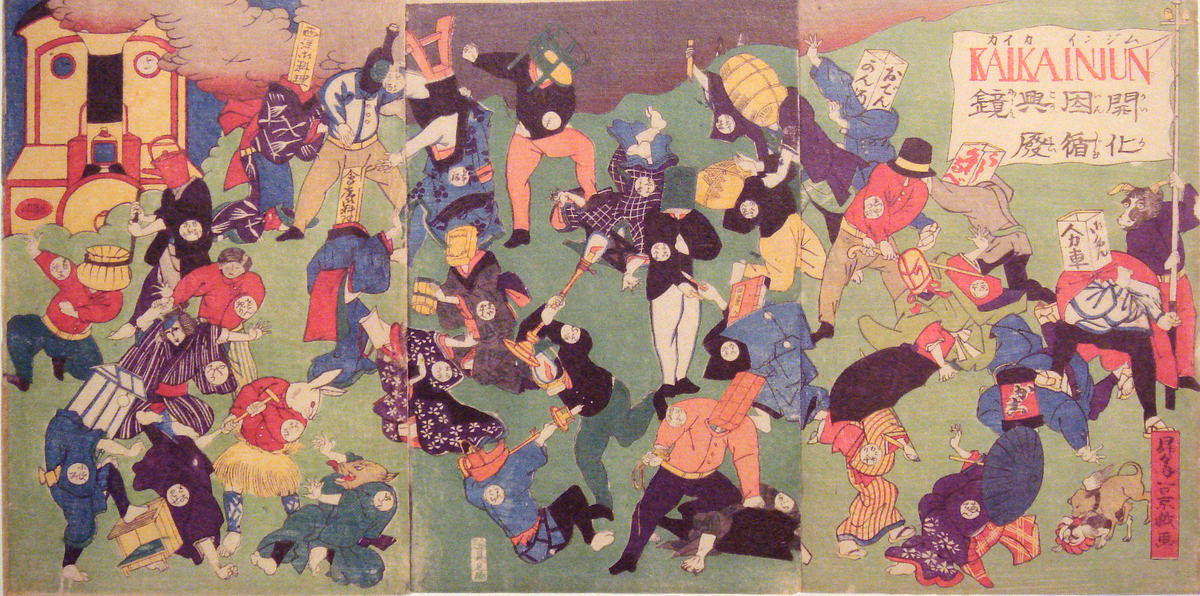
Beginning of Meiji Restoration, ends Tokugawa shogunate dominance
Japan

Political
4 min read
Updated By: History Editorial Network (HEN)
Published:
In the 19th century, Japan was under the rule of the Tokugawa shogunate, a feudal military government that had been in power for over two and a half centuries. During this time, the country had remained isolated from the rest of the world, maintaining a policy of limited contact with foreign nations.
However, by the mid-19th century, Japan faced increasing pressure from Western powers to open up its borders to trade and diplomatic relations. The shogunate's inability to effectively deal with these demands, coupled with internal unrest and economic hardship, led to mounting discontent among the people.
The Meiji Restoration was a complex political and social movement that aimed to restore power to the Emperor and modernize Japan in order to strengthen it against Western imperialism. The movement was led by a group of young samurai who sought to overthrow the shogunate and restore the Emperor to a position of political authority.
The Meiji Restoration had a profound impact on Japan, ushering in a period of rapid modernization and industrialization. The new government implemented wide-ranging reforms, including the establishment of a modern bureaucracy, the abolishment of the feudal system, and the promotion of Western-style education and technology.
These changes transformed Japan from a feudal society into a modern nation-state, enabling it to rapidly catch up with the Western powers and emerge as a major global player. The Meiji Restoration marked the end of the traditional samurai class and paved the way for Japan to become a modern industrialized nation.
#MeijiRestoration #TokugawaShogunate #Modernization #Japan #PoliticalTransformation

Explore the Life Moments of
 AI Twin