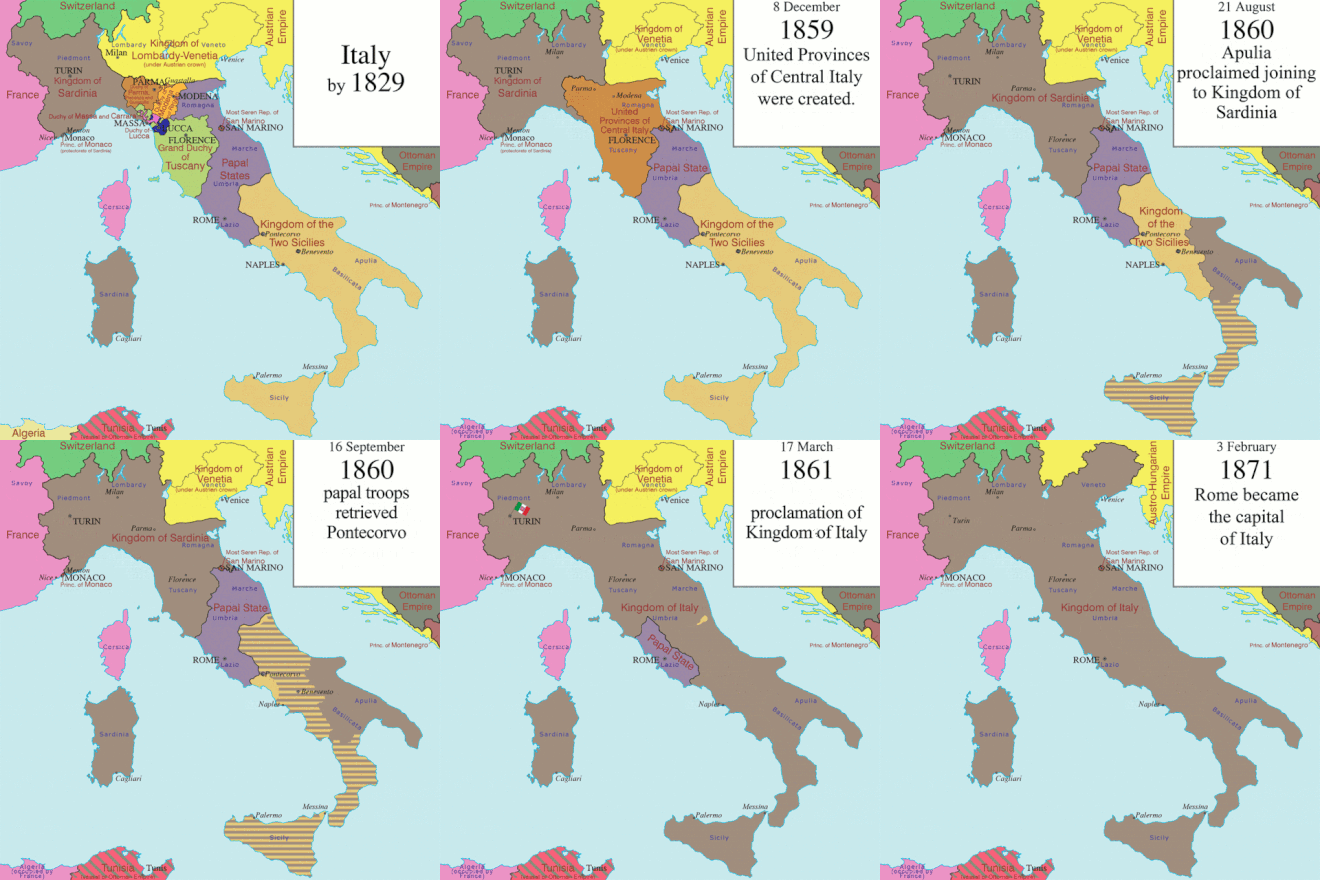
Rome becomes capital as Italy completes unification
Italy
Political
5 min read
Updated By: History Editorial Network (HEN)
Published:
In 1871, the process of Italian unification was officially completed with the establishment of Rome as the capital of the newly unified country. This was the culmination of decades of political and military efforts by various Italian states and leaders to unify the Italian peninsula under one government. The unification of Italy began in the 19th century, sparked by movements for independence and self-determination. Various regions and city-states that had been under foreign control or fragmented governance sought to unite under a single Italian nation. Key figures such as Giuseppe Garibaldi, Count Camillo di Cavour, and King Victor Emmanuel II played crucial roles in this unification process, which involved diplomatic negotiations, alliances, and wars against foreign powers. The Kingdom of Italy was formally established in 1861, but Rome remained under the control of the Papal States, ruled by the Pope. The capture of Rome in 1870 by Italian forces led to the transfer of the capital from Florence to Rome. With Rome as the capital, Italy solidified its territorial integrity and political unity. The completion of Italian unification with Rome as its capital had significant implications domestically and internationally. Domestically, it marked the end of centuries of division and foreign domination, paving the way for the development of a unified Italian identity and national consciousness. It also set the stage for economic and social reforms that aimed to modernize the newly unified country. Internationally, the unification of Italy altered the balance of power in Europe and reshaped the geopolitical landscape of the region. Italy emerged as a unified nation-state capable of asserting its interests and influence on the world stage. The unification of Italy also inspired nationalist movements in other parts of Europe and contributed to the wave of nationalism that characterized the 19th century. The unification of Italy with Rome as its capital symbolizes the triumph of the Italian people's aspirations for independence and unity. It represents a turning point in Italian history and has left a lasting legacy on the country's politics, culture, and society. The events of 1871 continue to be commemorated as a defining moment in the history of Italy and the European continent. #ItalianUnification #RomeCapital #NationalIdentity
Primary Reference
Unification of Italy - Wikipedia

Explore the Life Moments of
 AI Twin