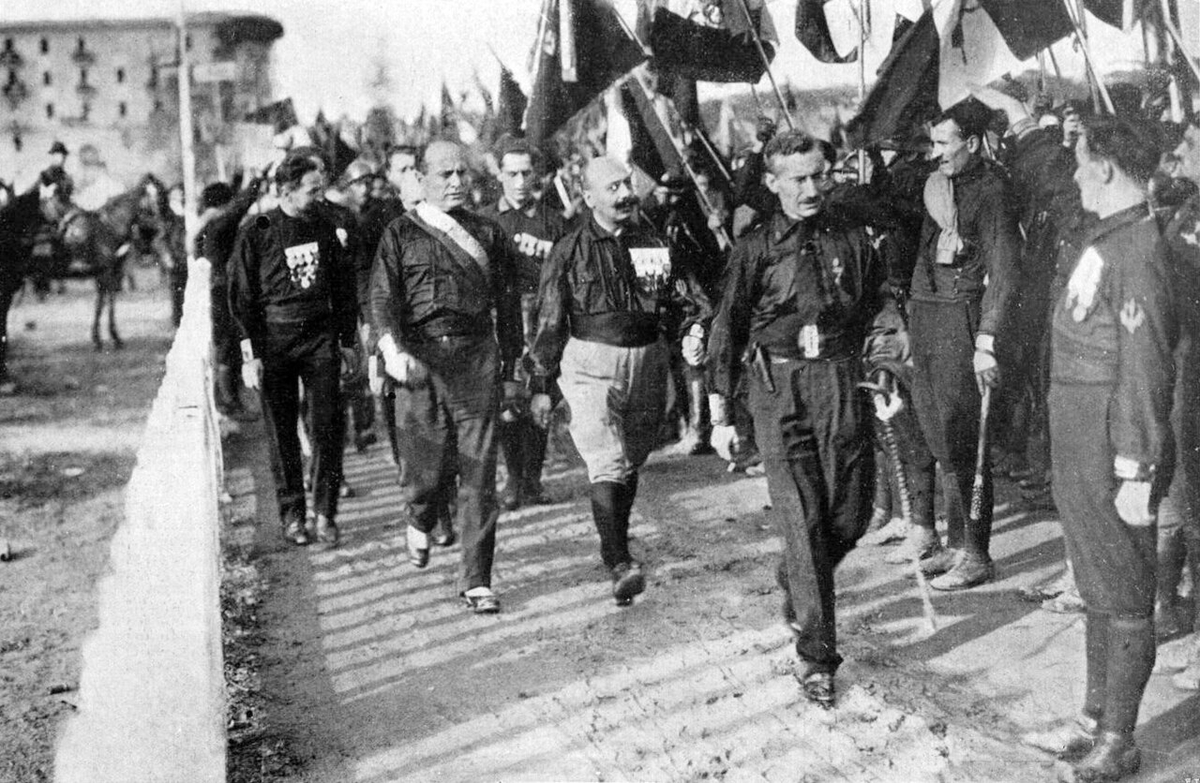
Mussolini's rise to power through March on Rome to establish fascist regime.
Italy
Political
Rise of Dictatorship
3 min read
Updated By: History Editorial Network (HEN)
Published:
In the early 1920s, Italy was facing political instability and economic hardships. Benito Mussolini, leading the National Fascist Party, took advantage of the situation to rally support for his vision of a fascist Italy. On the supposed victorious day, Mussolini and his supporters marched towards Rome from various regions, demanding power. The King of Italy, afraid of a potential civil war, appointed Mussolini as the Prime Minister. This event marked the rise of fascism in Italy. The March on Rome had a significant impact on the political landscape of Italy. It solidified Mussolini's power and led to the establishment of a fascist dictatorship. With Mussolini in control, Italy experienced a period of authoritarian rule and suppression of political dissent. Mussolini's regime promoted nationalism, militarism, and censorship, ultimately leading Italy into WWII as an ally of Nazi Germany. The March on Rome displayed the effectiveness of fascist tactics in seizing power and manipulating public sentiment. It set a precedent for other authoritarian leaders around the world on how to consolidate power and stifle opposition. The event highlighted the vulnerability of democratic systems in times of crisis and underscored the importance of vigilance in safeguarding democratic values. #Mussolini #MarchonRome #Fascism #PoliticalInstability #Authoritarianism #ItalianHistory #RiseofDictatorship
Primary Reference
March on Rome - Wikipedia

Explore the Life Moments of
 AI Twin