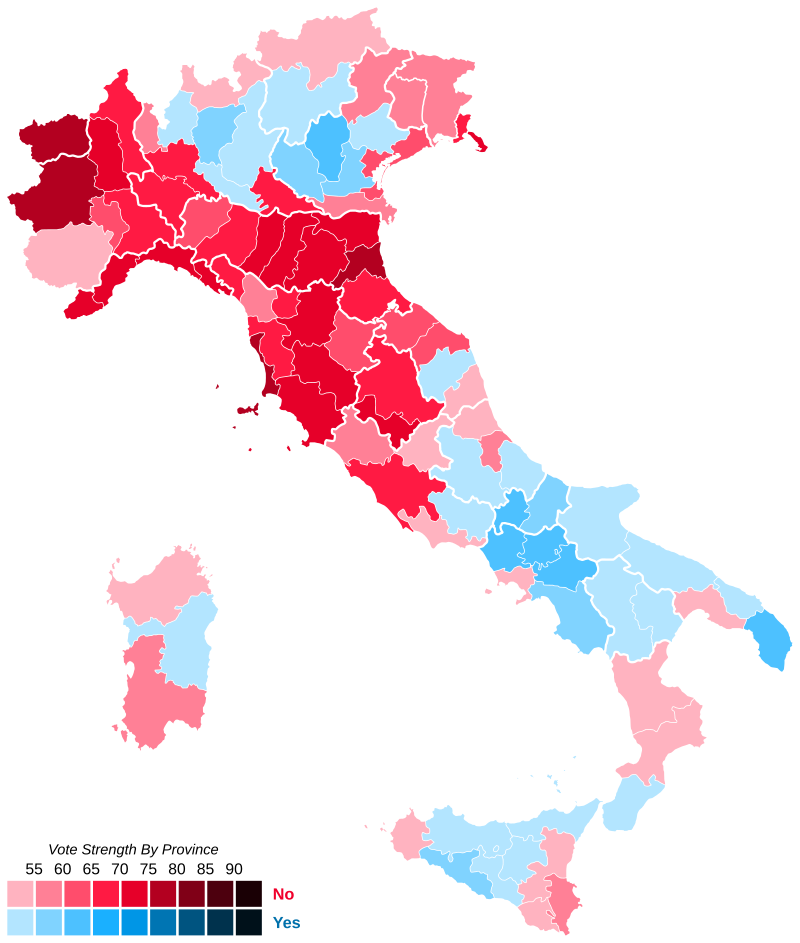
Divorce legalized in Italy through popular vote.
Italy

Social
7 min read
Updated By: History Editorial Network (HEN)
Published:
Italy's decision to legalize divorce on May 12, 1974, was indeed a landmark moment in the nation's history, representing a transformative shift in societal norms and the legal landscape. The journey to this moment was fraught with cultural, religious, and political challenges that reflected deeply entrenched Catholic traditions. Prior to this change, Italy stood as one of the few Western nations where divorce was not permitted, largely due to the influence of the Catholic Church, which vehemently opposed the dissolution of marriages.
In the post-World War II era, Italy was undergoing rapid social change. As economic prosperity increased and educational levels rose, so did calls for greater individual rights and freedoms. Progressive groups, including feminist organizations and secular activists, began pushing for divorce legislation, arguing that it was a matter of personal freedom and social justice. They highlighted the plight of individuals trapped in abusive or unhappy marriages, especially women, who had no legal recourse to leave.
In 1970, the Italian parliament passed the "Fortuna-Baslini Law," which legalized divorce under certain conditions. However, the Catholic Church and conservative political parties fiercely resisted this law. In response, they mounted a vigorous campaign to repeal it through a referendum, using their extensive influence over Italian society.
The lead-up to the 1974 referendum was characterized by intense political mobilization and public debate. Conservative factions, including the Christian Democrats and the Catholic Church, framed the issue as a defense of family values and religious doctrine. Meanwhile, progressives rallied in defense of the law, emphasizing the importance of individual rights and gender equality.
Ultimately, the referendum results revealed a society ready for change. A decisive majority of voters chose to uphold the divorce law, signaling a clear desire for progressive reforms and individual freedoms. The new legal framework allowed couples to divorce by mutual consent after five years of separation or, in cases of abuse or infidelity, after three years.
This outcome marked a profound cultural shift in Italy, as it directly challenged the long-standing dominance of the Catholic Church in public and private life. Women, in particular, benefited from the new law, as it provided them with a legal mechanism to escape abusive or unsatisfactory marriages. Moreover, the referendum symbolized a growing secularization of Italian society, where individuals increasingly prioritized personal autonomy over religious mandates.
The implications of this referendum extended beyond Italy. In other predominantly Catholic countries, the success of the Italian divorce referendum served as a rallying point for similar reform movements. It became a significant case study in the interplay between religion, state, and personal rights, illustrating how democratic processes can shape social progress.
Overall, Italy's legalization of divorce through this historic referendum was not just a change in law but a reflection of the evolving attitudes and values of the Italian people. It underscored the tension between tradition and modernity and affirmed the power of democratic participation in driving progressive societal changes.
#Italy #DivorceReferendum #ProgressiveChange #ChurchAndState #GenderEquality #SocialReform #MomentsOfLife #MoofLife_Moment #MoofLife
Primary Reference
1974 Italian divorce referendum - Wikipedia

Explore the Life Moments of
 AI Twin