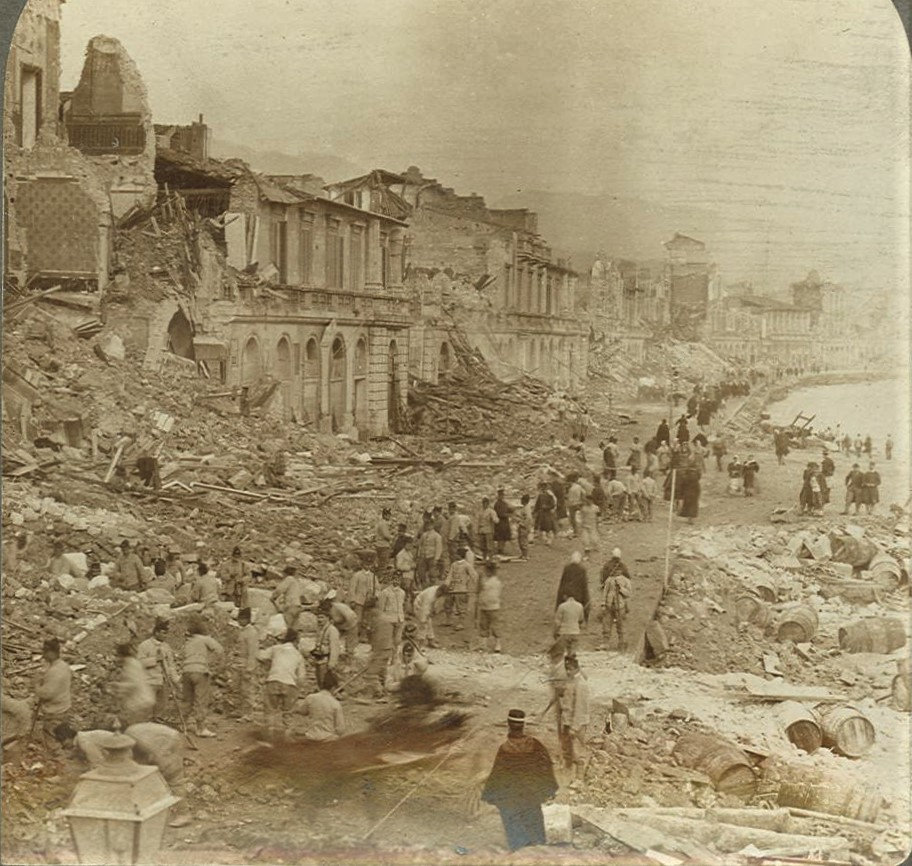
Deadly earthquake strikes Southern Italy, causing widespread destruction and a devastating loss of life.
Italy
Disaster
4 min read
Updated By: History Editorial Network (HEN)
Published:
In Southern Italy, the Messina earthquake struck with a magnitude of 7.1 on the Richter scale, leading to catastrophic consequences. The quake's intense shaking, reaching a maximum Mercalli intensity of XI, left a devastating impact on the region. Between 75,000 to 200,000 lives were tragically lost in the aftermath. The seismic event's epicenter was in the Strait of Messina, which separates the Italian mainland from the island of Sicily. The earthquake's forceful vibrations caused widespread destruction, reducing buildings to rubble and triggering landslides. The cities of Messina and Reggio Calabria were among the hardest hit, with many structures collapsing and trapping residents beneath the debris. The ensuing chaos and devastation overwhelmed local authorities and rescue efforts. The death toll continued to climb as the scale of the disaster became apparent. The lack of preparedness and infrastructure to handle such a crisis exacerbated the challenges faced by survivors and responders alike. The impact of the Messina earthquake was felt far beyond the physical destruction. The psychological toll on the survivors and the broader Italian population was profound. The event served as a stark reminder of the unpredictable and deadly nature of earthquakes, prompting a reevaluation of disaster preparedness measures in the region. In the years following the earthquake, reconstruction efforts were undertaken to rebuild the affected areas and support the communities that had been shattered by the disaster. The memory of the Messina earthquake remains a somber chapter in Italy's history, a testament to the resilience of its people in the face of unimaginable loss and devastation. #MessinaEarthquake #SouthernItaly #DisasterResponse #CatastrophicLoss #Resilience
Primary Reference
Slip on a mapped normal fault for the 28th December 1908 Messina ...

Explore the Life Moments of
 AI Twin