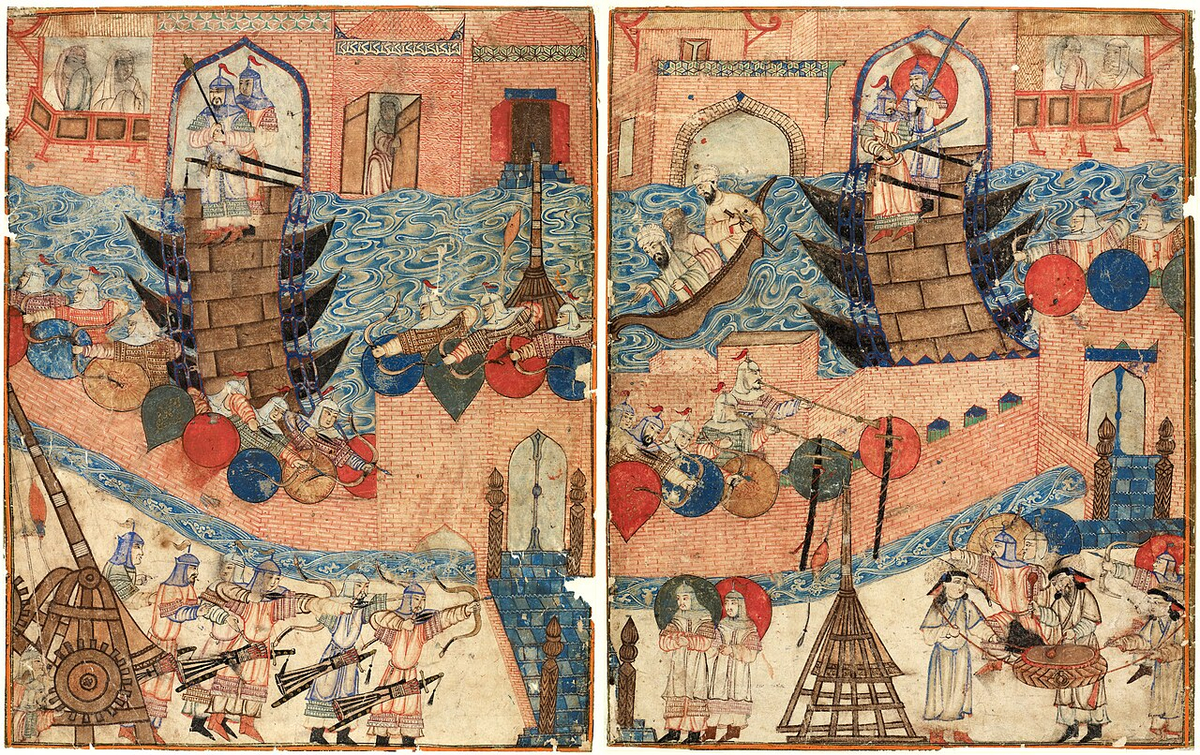
Siege by Mongols leads to Abbasid Caliphate's downfall in Baghdad.
Iraq

Global Trade
3 min read
Updated By: History Editorial Network (HEN)
Published:
The Siege of Baghdad by the Mongol Empire marked the culmination of a series of military campaigns led by Hulagu Khan, resulting in the fall of the Abbasid Caliphate. The Abbasid Caliphate, which had ruled over a vast empire for centuries, was weakened by internal conflicts and unable to withstand the Mongol invasion.
The siege lasted for several weeks, with the Mongols using advanced siege warfare tactics to breach the city's defenses. The devastating impact of the siege was felt not only in terms of loss of life but also in the destruction of cultural and intellectual treasures of the Islamic world. The famous House of Wisdom, renowned for its vast library and contributions to scholarly work, was burned to the ground.
The fall of Baghdad had far-reaching consequences, leading to the end of the Abbasid Caliphate and the fragmentation of Islamic power in the region. The Mongol conquest also drastically altered the demographic and political landscape of the Middle East.
Today, the Siege of Baghdad remains a poignant reminder of the destructive power of warfare and the fragility of empires. It serves as a cautionary tale about the consequences of internal conflicts and external invasions. #MongolEmpire #AbbasidCaliphate #IraqiHistory
Primary Reference
Siege of Baghdad - Wikipedia

Explore the Life Moments of
 AI Twin