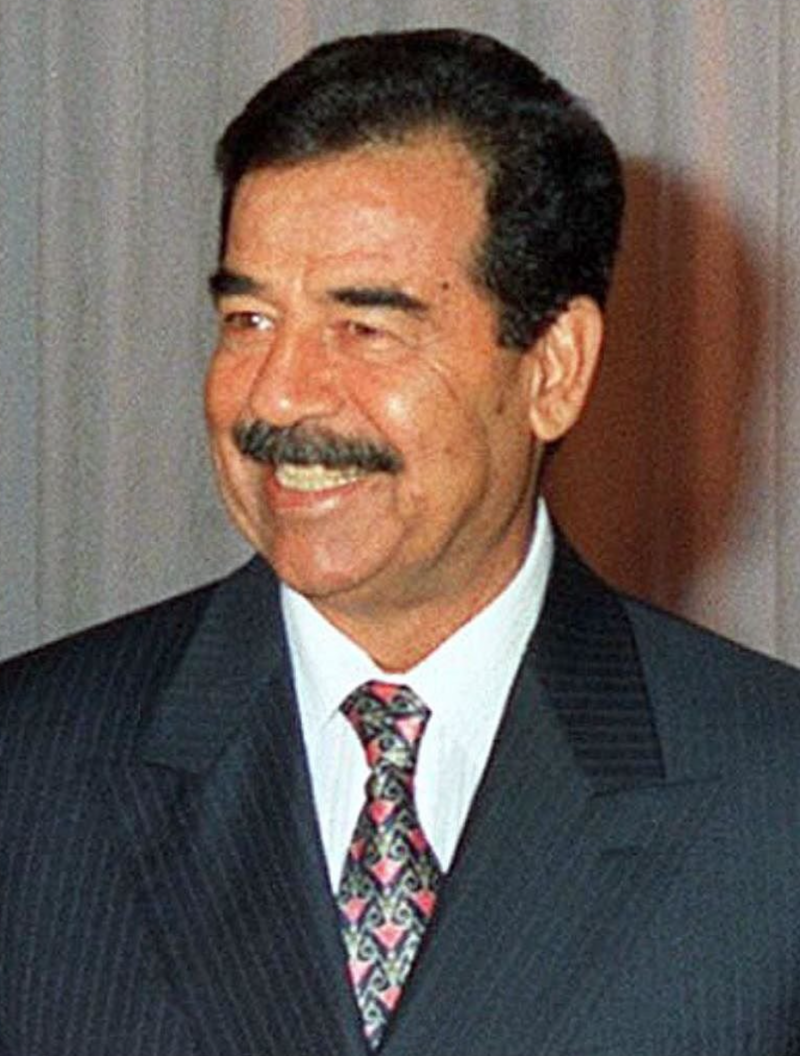
Saddam Hussein's Presidency following Ahmed Hassan al-Bakr's resignation changes Iraq's leadership.
Iraq
Political
Dictatorship
3 min read
Updated By: History Editorial Network (HEN)
Published:
After Ahmed Hassan al-Bakr resigned, Saddam Hussein assumed the presidency of Iraq. Hussein, previously serving as Vice President and leader of the Ba'ath Party, wasted no time consolidating power. He quickly initiated a brutal purge of political opponents, aiming to solidify his authority. This move marked a shift towards a more authoritarian regime with Hussein's iron-fisted control.
Under Hussein's rule, Iraq experienced political repression, human rights abuses, and conflicts with neighboring countries. His aggressive foreign policy led to the Iran-Iraq War and the invasion of Kuwait, resulting in devastating consequences for the region. Despite facing international condemnation and economic sanctions, Hussein's grip on power remained tight for decades.
The rise of Saddam Hussein to the presidency reshaped Iraq's political landscape, ushering in a period defined by dictatorship, instability, and violence. His reign left a lasting impact on the country and its people, shaping its trajectory for years to come. The consequences of his rule continue to reverberate in the region today.
#Iraq #SaddamHussein #Presidency #Authoritarianism #PoliticalInstability #Dictatorship #Conflict
Primary Reference
Ahmed Hassan al-Bakr - Wikipedia

Explore the Life Moments of
 AI Twin