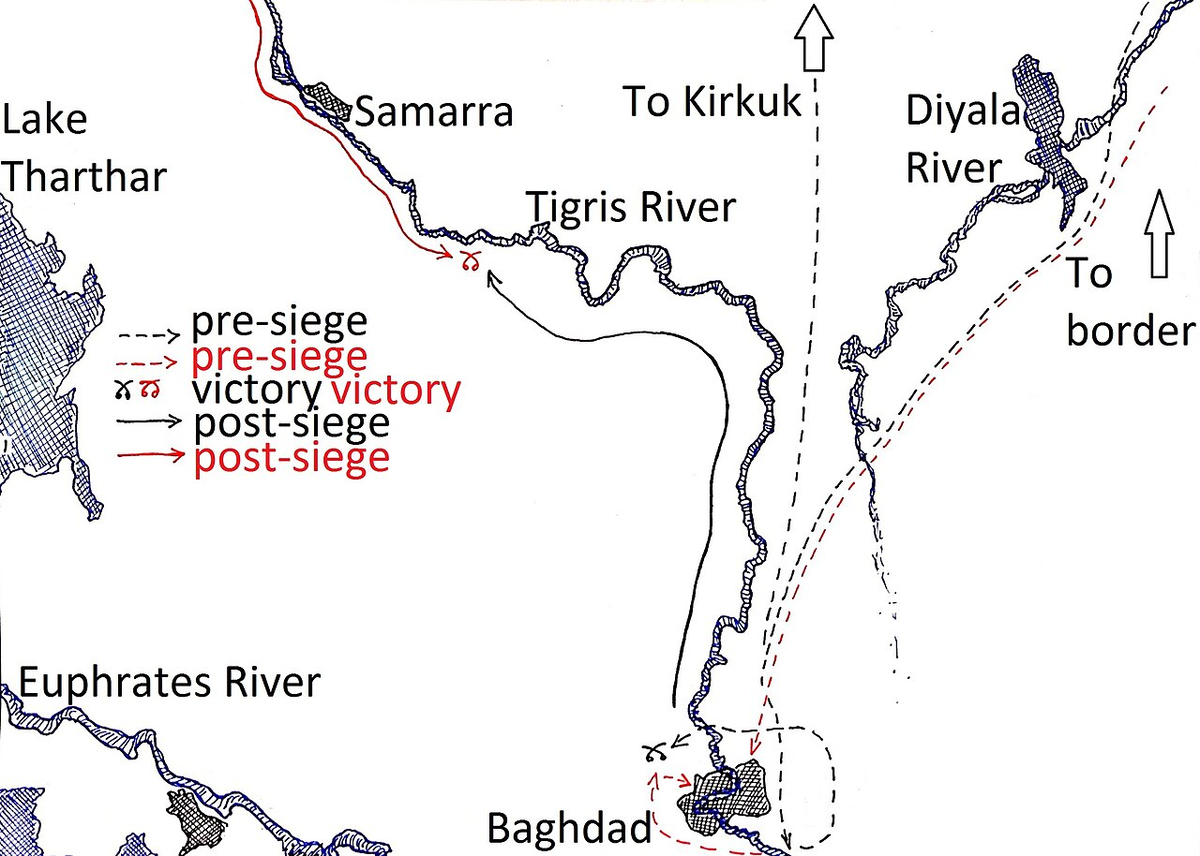
Baghdad falls under Nadir Shah's rule during Persian conquest.
Iraq
Political
Global Trade
3 min read
Updated By: History Editorial Network (HEN)
Published:
In 1733, Baghdad fell to Nadir Shah of Persia after a swift and decisive conquest. The city, situated strategically on trade routes and with a rich cultural heritage, had long been a prized possession in the region. Nadir Shah's capture of Baghdad marked a significant shift in power dynamics, as it brought the prosperous city under Persian control.
The fall of Baghdad to Nadir Shah had a profound impact on the political landscape of the time. It further solidified Persian influence in the region and dealt a blow to the Ottoman Empire, which had previously held sway over Baghdad. The conquest also brought about changes in governance, administration, and cultural dynamics in the city.
Nadir Shah's capture of Baghdad underscores the historical importance of the city as a coveted prize in the power struggles of the Middle East. The event serves as a reminder of the fluid nature of political boundaries and the continual contest for dominance in the region. The implications of this event reverberated far beyond Baghdad, shaping the course of history for centuries to come.
#BaghdadCapture #NadirShah #PersianEmpire #MiddleEastHistory
Primary Reference
Siege of Baghdad (1733) - Wikipedia

Explore the Life Moments of
 AI Twin