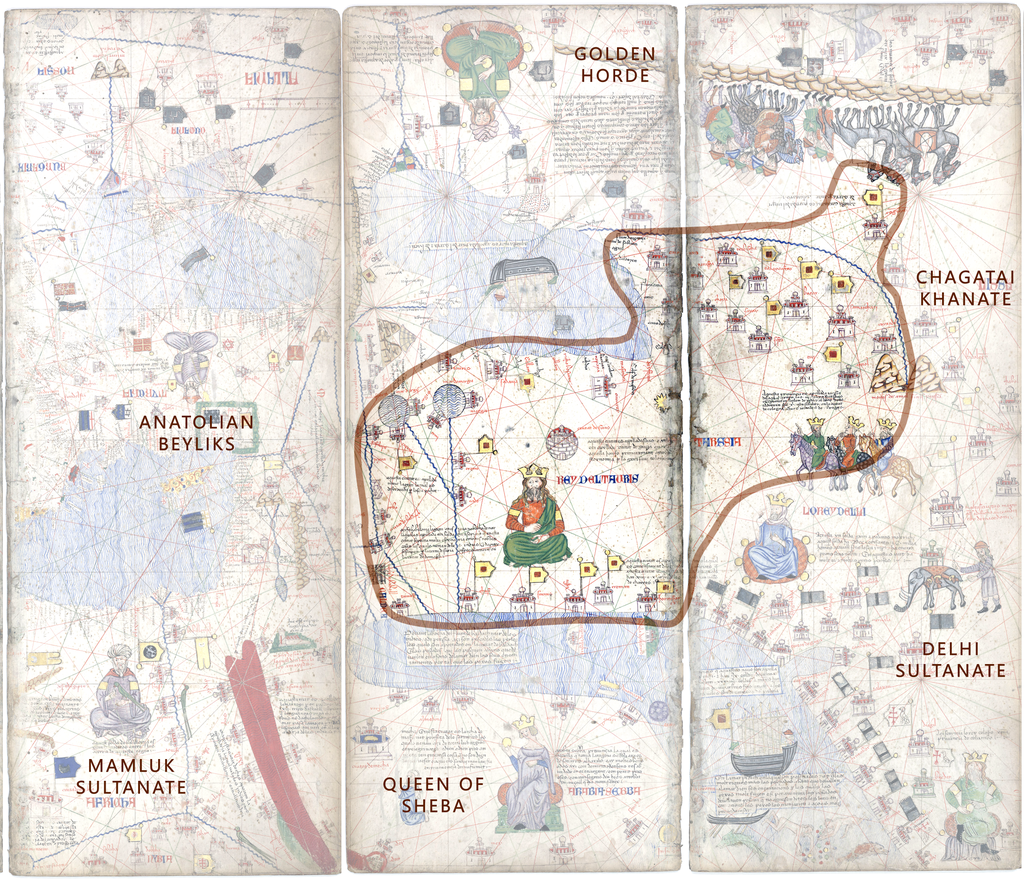
The Il-khanid Khanate in Persia
Art
4 min read
Updated By: History Editorial Network (HEN)
Published:
In 1256, the Il-khanid, a Mongol khanate, was established in Persia after the Mongol conquest of the region. This pivotal event followed the vast Mongol Empire's fragmentation into smaller entities, with Hulagu Khan leading the Mongol forces into Persia. The Il-khanid dynasty was a significant development as it marked the Mongol's control over a vast territory encompassing modern-day Iran, Azerbaijan, and parts of Iraq and Turkey.
The reign of the Il-khanids in Persia brought about a period of cultural and economic exchange, as the Mongols assimilated into the Persian society and adopted elements of Persian culture, administration, and arts. The Il-khanids promoted religious tolerance, allowing various faiths to coexist in their domains, which further facilitated the exchange of ideas and knowledge.
Under the Il-khanids, Persia experienced significant urban development, with the founding of new cities and the restoration of existing ones. Infrastructure projects, such as the construction of bridges, roads, and mosques, contributed to the region's economic prosperity and trade connectivity along the Silk Road.
The establishment of the Il-khanid dynasty also had lasting impacts on Persian art and architecture, blending Mongol and Persian styles to create a unique fusion known as Il-khanid art. This fusion influenced subsequent artistic developments in the region and beyond.
The Il-khanid rule in Persia eventually declined due to internal struggles, invasions, and the devastating impact of the Black Death. The dynasty came to an end in the mid-14th century, but its legacy as a bridge between the Mongol and Persian worlds endured.
#IlkhanidDynasty #MongolConquest #CulturalExchange #PersianArt #SilkRoad
Primary Reference
Il-Khanid dynasty | Persian Empire, Central Asia, Mongol Rule ...

Explore the Life Moments of
 AI Twin