Shah Abbas II Reign: Safavid Decline
Political
4 min read
Updated By: History Editorial Network (HEN)
Published:
During the reign of Shah Abbas II, Safavid Iran experienced a significant decline. Shah Abbas II ascended to the throne at a young age, with the empire already facing internal strife and external threats from the Ottoman and Mughal Empires. His reign was marked by a weakening central authority, leading to increased power struggles among the nobility and provincial governors.
One of the major factors contributing to the decline of Safavid Iran during Shah Abbas II's rule was the diminishing control over the economy. The state struggled with financial difficulties, relying heavily on the Qizilbash tribal forces for support. This weakened the central government's authority and impacted its ability to govern effectively.
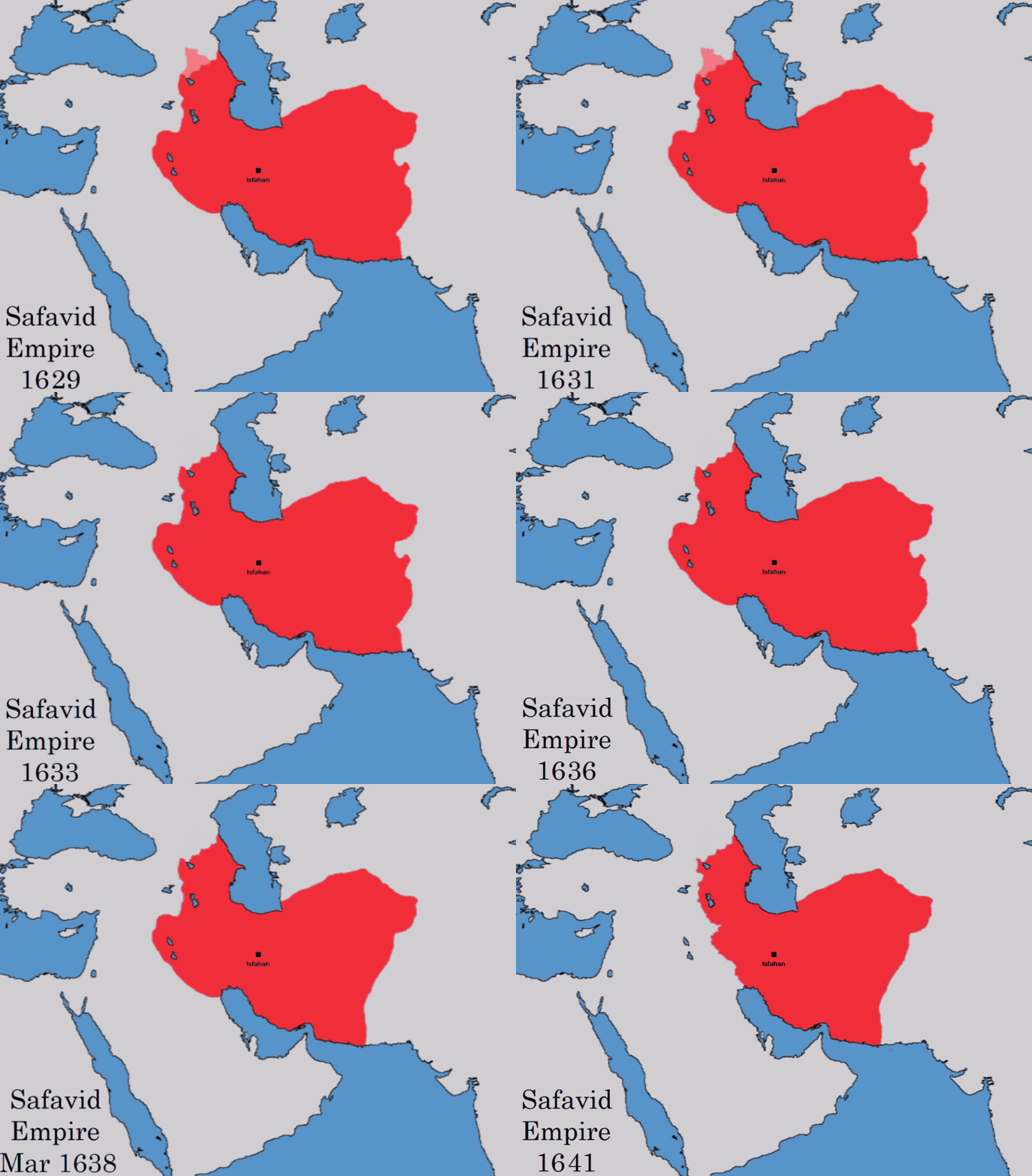
Furthermore, Shah Abbas II's reign saw a decrease in military strength and territorial losses. The Safavid army faced defeats against the Ottomans and lost control over key territories, weakening the empire's position in the region. The empire also faced internal rebellions and uprisings, further destabilizing the country.
The decline of Safavid Iran during Shah Abbas II's reign had long-lasting consequences for the empire. It marked the beginning of a period of instability and decline that would ultimately lead to the fall of the Safavid dynasty. The weakening of central authority, economic challenges, military defeats, and internal strife all played a role in shaping the fate of Safavid Iran during this time.
Overall, the reign of Shah Abbas II was a turning point in Safavid Iran's history, signaling the beginning of the end for the once-powerful empire. The decline experienced during this period would have a lasting impact on the region and shape its future trajectory. #SafavidIran #ShahAbbasII #EmpireDecline #HistoricalTurningPoint
Primary Reference
Abbas II of Persia - Wikipedia

Explore the Life Moments of
 AI Twin