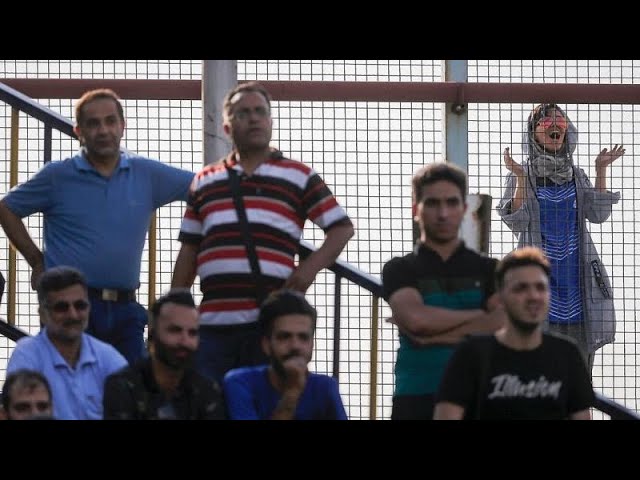
Self immolation of women's rights activist Sahar Khodayari over six month prison sentence for attempting to enter a public stadium to watch a football game, against the national ban against women at such events
7 min read
Updated By: History Editorial Network (HEN)
Published:
On September 9, 2019, a tragic event occurred in Iran that would reverberate across the world and shed light on the struggles faced by Iranian women. Sahar Khodayari, a 29-year-old women's rights activist, self-immolated in front of the Islamic Revolutionary Court in Tehran. Her desperate act was a direct protest against her arrest and the subsequent six-month prison sentence she faced for attempting to enter Tehran’s Azadi Stadium to watch a football match.
Sahar Khodayari, who later became widely known as "Blue Girl" after the colors of her favorite team, Esteghlal, was caught by security officials on March 12, 2019, as she tried to sneak into the stadium disguised as a man. Iran's strict regulations prohibit women from attending men's sports events, a policy in place since the Islamic Revolution of 1979. Despite minor efforts and international pressure to lift the ban, the restriction has largely remained in place.
Following her arrest, Sahar was detained for three days and then released on bail while awaiting her trial. In September, upon returning to court to retrieve her confiscated mobile phone, she overheard that she might face a lengthy prison sentence. It was this devastating news that reportedly drove her to set herself on fire in a moment of profound despair and protest.
Sahar suffered severe burns covering 90% of her body and was taken to Motahari Hospital in Tehran. Despite the best efforts of medical staff, she succumbed to her injuries a week later, on September 9, 2019. Her death sent shockwaves through Iranian society and sparked an outcry from human rights activists, both within Iran and internationally.
The incident garnered significant attention on social media, with hashtags like #BlueGirl and #LetWomenInStadiums trending worldwide. Many people expressed their grief and outrage, using Sahar's story to highlight the broader issue of women's rights in Iran. Her tragic death also drew strong reactions from prominent figures and organizations, including FIFA, the international governing body of football, which called for Iranian authorities to end the stadium ban.
In the wake of Sahar's death, there were some positive changes. Under mounting pressure, Iranian authorities allowed a limited number of women to attend a World Cup qualifier match between Iran and Cambodia on October 10, 2019. This event marked a significant, albeit small, step towards gender equality in the country’s sports arenas. Thousands of Iranian women attended the match, celebrating what they hoped would be the beginning of a new era.
Sahar Khodayari’s self-immolation was not just a desperate act of protest but also a powerful symbol of resistance against gender discrimination. Her story underscores the ongoing struggle for women's rights in Iran and the high personal costs of activism in the face of oppressive laws. While her death was a profound loss, the legacy of Sahar Khodayari continues to inspire movements for equality and justice, both in Iran and around the world.
#MomentsOfLife #MoofLife_Moment #MoofLife #BlueGirl #WomensRights #IranianWomen #GenderEquality #HumanRights #LetWomenInStadiums
Primary Reference
Death of Sahar Khodayari - Wikipedia

Explore the Life Moments of
 AI Twin