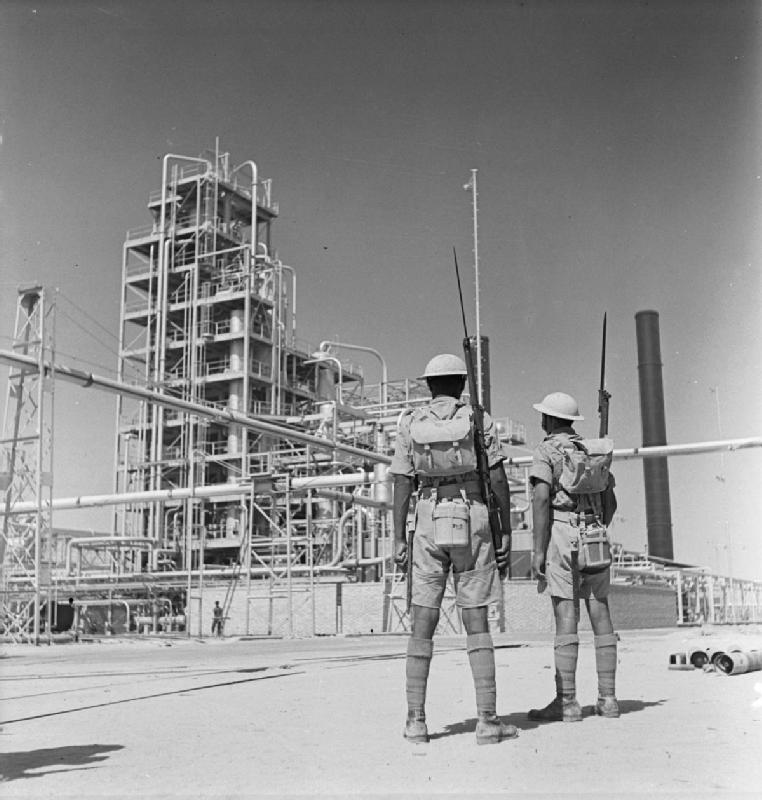
Invasion to Secure Oil Fields in World War II

Political
Global Trade
4 min read
Updated By: History Editorial Network (HEN)
Published:
During World War II, British and Soviet forces jointly invaded Iran to safeguard the country's oil fields. This move aimed to secure a vital supply of oil for the Allies and prevent the Iranian government from potentially siding with the Axis powers. The British and Soviets were concerned about Iran's strategic location and resources, which could be used by Germany to threaten their interests in the region.
The invasion was met with limited resistance from Iranian forces and swiftly resulted in the occupation of key Iranian cities. Reza Shah, the ruler of Iran at the time, was forced to abdicate in favor of his son, Mohammad Reza Pahlavi, who was seen as more amenable to Allied interests.
The Anglo-Soviet invasion of Iran had significant consequences for the country and its people. The presence of foreign forces fueled nationalist sentiments, leading to widespread discontent and resistance. The loss of sovereignty and control over its resources deeply impacted Iran's political landscape and sowed the seeds of future unrest.
Following the invasion, the Allied forces maintained control over Iran's oil fields and transportation networks, ensuring a crucial supply of oil for their war efforts. This further entrenched Iran's position as a pawn in the geopolitical struggles of major powers.
The events of the Anglo-Soviet invasion of Iran underscore the complex dynamics of wartime alliances and the sacrifices made by smaller nations in the pursuit of larger strategic goals. The invasion left a lasting impact on Iran's relations with the West and its sense of national identity.
#AngloSoviet #IranInvasion #WorldWarII #OilPolitics
Primary Reference
Anglo-Soviet invasion of Iran - Wikipedia

Explore the Life Moments of
 AI Twin