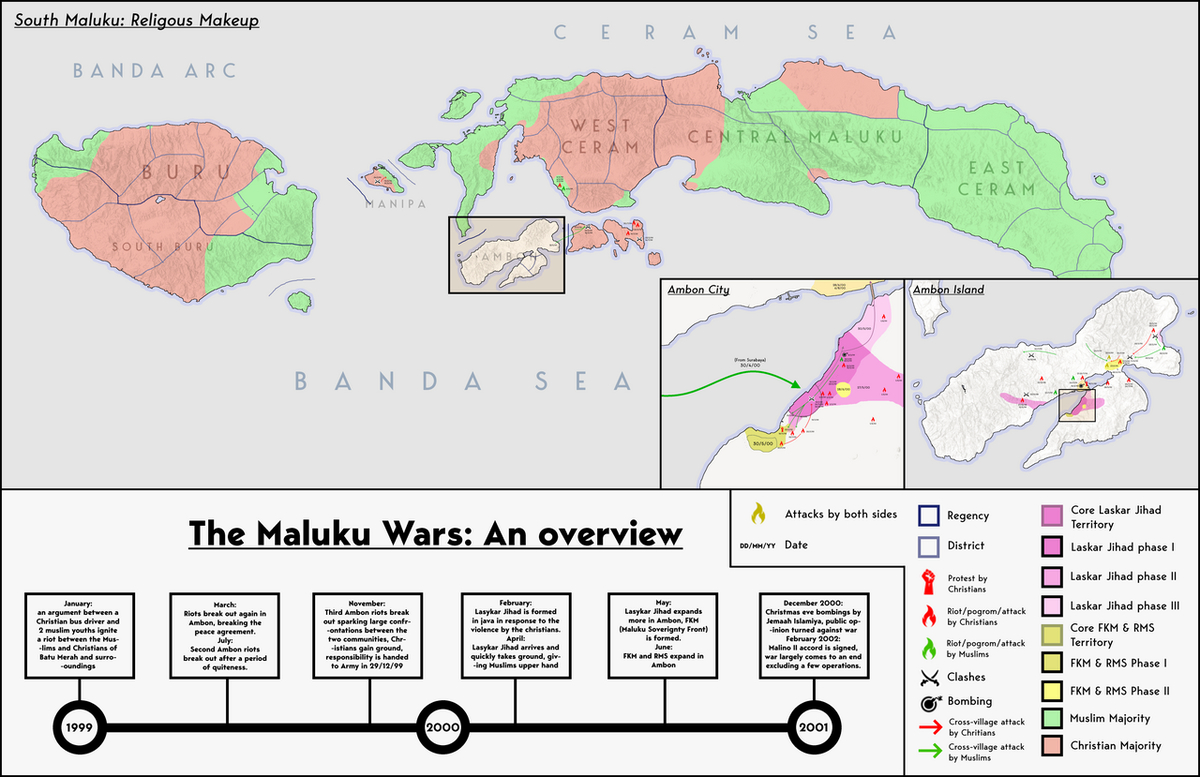
Maluku sectarian conflict resolved after 6 years of violence and casualties.
Indonesia
Political
Community Reconciliation
6 min read
Updated By: History Editorial Network (HEN)
Published:
The Maluku sectarian conflict, rooted in the religious and ethnic tensions between Muslim and Christian communities in the Maluku islands of Indonesia, came to an official end during February, following a protracted period of violence. The conflict, which began with clashes in Ambon, quickly escalated, resulting in widespread atrocities. Over the span of six years, both sides suffered severely, with thousands of casualties and extensive property damage.
The declaration of cessation was witnessed by key stakeholders, including community leaders, government officials, and representatives from both religious groups. The Malino II Accord, a pivotal negotiation facilitated by the Indonesian government, played a vital role in this process. This agreement aimed to address the root causes of the conflict and establish mechanisms for reconciliation and reconstruction.
Throughout the conflict period, more than 5,000 people lost their lives, and around 500,000 were displaced, seeking refuge in other parts of Indonesia or in makeshift camps within the region. Homes, schools, and places of worship were destroyed, further deepening the divisions between the two communities. International humanitarian organizations launched multiple aid initiatives to support the affected population and rebuild community infrastructure.
The economic impact of the conflict was substantial. The Maluku economy, heavily reliant on fishing, agriculture, and tourism, suffered significant disruptions. Many businesses shut down, and the local workforce faced unemployment and instability. Additionally, the education and healthcare systems were severely compromised, leaving long-lasting effects on the local population's well-being and development.
Efforts towards reconciliation saw the creation of joint community projects, interfaith dialogues, and peacebuilding workshops, which aimed to rebuild trust and collaborative community spirit. Local civil society groups, together with international agencies, supported initiatives to rehabilitate the displaced and restore communal harmony.
The official end to the Maluku sectarian conflict marked a crucial turning point in restoring peace and stability in the region. However, the task of rebuilding and healing the deep-rooted scars continues. Ongoing efforts focus on ensuring security, promoting interfaith cooperation, and economic recovery, essential for the lasting peace and prosperity of the Maluku islands.
#IndonesianConflict #MalinoAccord #Peacebuilding #InterfaithDialogue #CommunityReconciliation #MoofLife
Primary Reference
Maluku sectarian conflict - Wikipedia

Explore the Life Moments of
 AI Twin