Construction of Hindu temple Prambanan in Central Java: A Historical Overview
Indonesia
Culture
5 min read
Updated By: History Editorial Network (HEN)
Published:
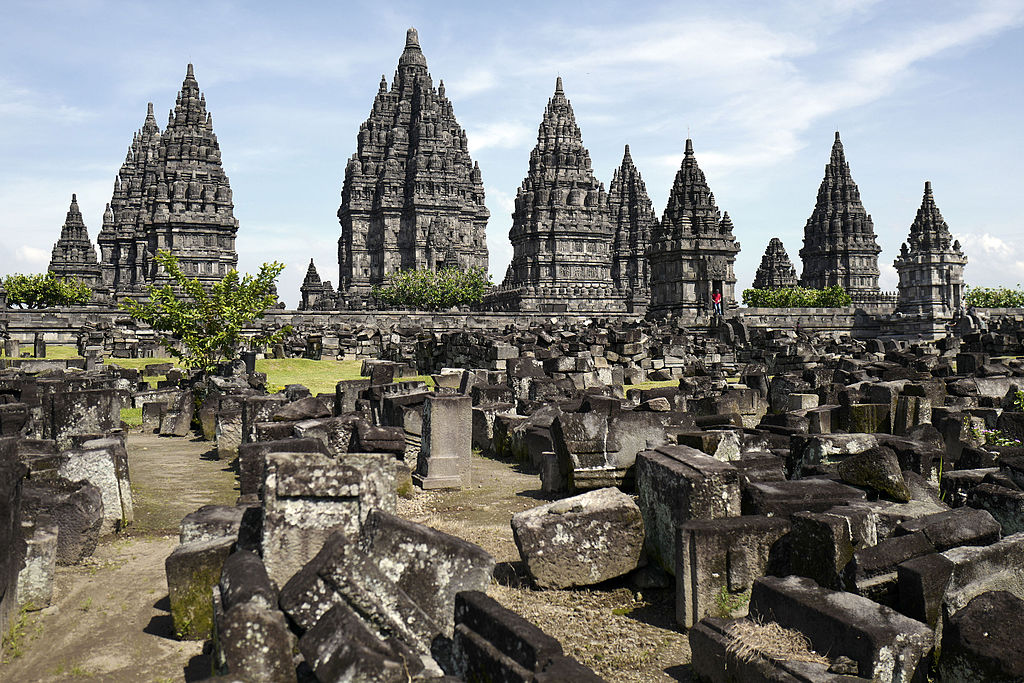
In Central Java, under the Sanjaya Dynasty of the Mataram Kingdom, the construction of the Hindu temple complex Prambanan marked an important cultural and religious development. The temple, known locally as Rara Jonggrang, was dedicated to the Trimurti – Brahma the Creator, Vishnu the Preserver, and Shiva the Destroyer. It was a period of Hindu revival in Java, significant for establishing the prominence of Hindu architecture and religious practices in the region.
Prambanan's design showcases traditional Javanese architecture, characterized by tall and pointed structures typical of Hindu temple architecture. The main complex has eight main shrines or candis and is surrounded by 240 smaller ones. The Shiva temple dominates the central part, standing at 47 meters high, flanked by the Brahma and Vishnu temples, each 33 meters high.
The construction of Prambanan illustrates the technological and architectural advancements of the time. Stone was the primary material used, quarried from nearby and transported to the site through labor-intensive methods. Intricate carvings on the temples depict scenes from the Ramayana epic, reflecting the rich mythological tradition and the skilled craftsmanship of the builders. These carvings provide valuable insights into the cultural and artistic expressions of the time.
The temple complex played an integral role in the religious life of the society, serving not only as a place of worship but also as a cultural hub. Rituals, ceremonies, and festivals held at Prambanan attracted people from various parts of the kingdom, reinforcing its status as a major spiritual center.
Prambanan's archaeological significance extends beyond its religious importance. It represents a historical record of the political and social dynamics of the era, including the influence of Hinduism on the local population. The preservation of Prambanan offers contemporary society a tangible connection to Indonesia's pre-Islamic past and supports the study of ancient Javanese civilization.
In summary, the construction of the Prambanan temple complex was a pivotal event in the history of Central Java, reflecting significant religious, cultural, and architectural developments. Its standing structures today continue to draw scholars, tourists, and devotees, testifying to the enduring legacy of the region's Hindu heritage.
#MoofLife #Prambanan #HinduTemple #CulturalHeritage #JavaneseArchitecture #Archaeology #SanJayaDynasty
Primary Reference
Global Volcanism Program | Indonesia Volcanoes

Explore the Life Moments of
 AI Twin