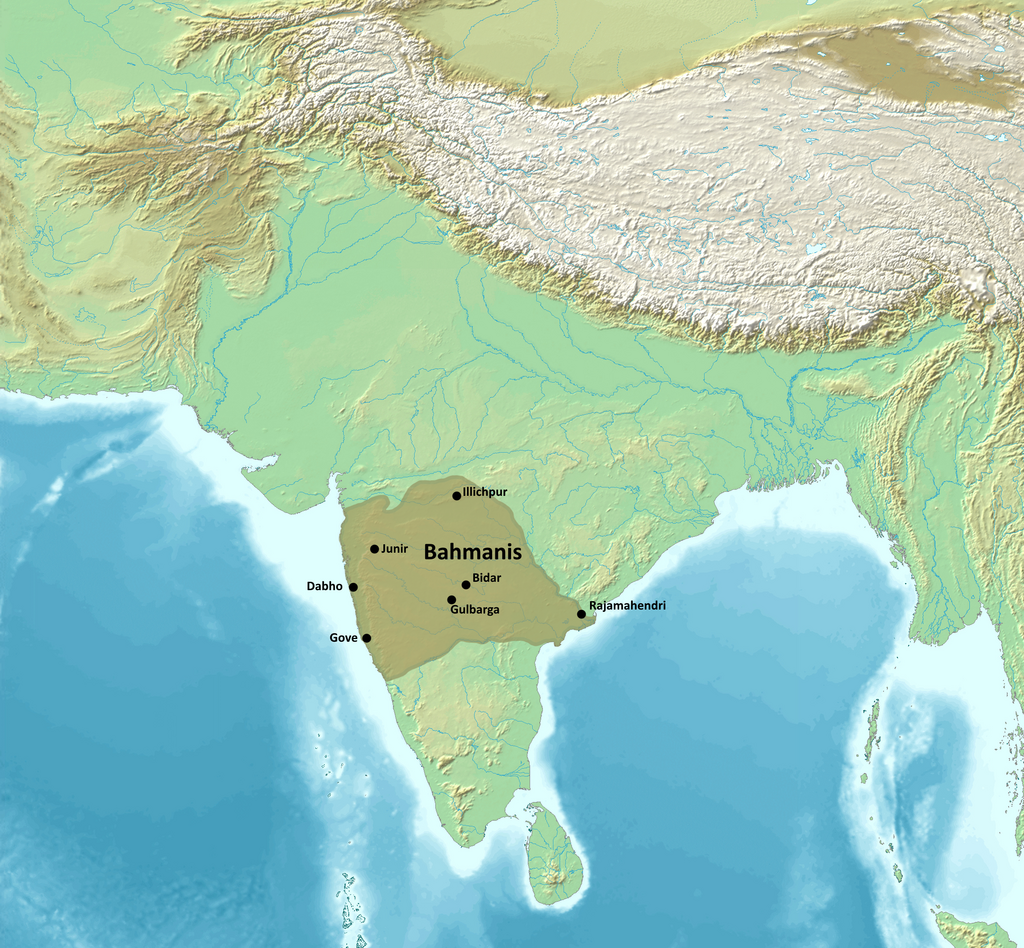
The Bahmani Sultanate's Founding

Political
Cultural Exchange
4 min read
Updated By: History Editorial Network (HEN)
Published:
During the 14th century, the disintegration of the Delhi Sultanate led to the emergence of the Bahmani Sultanate in Deccan, India. This new sultanate was established by Ala-ud-Din Hasan Bahman Shah, a noble of the Delhi Sultanate who declared his independence after the fall of the Tughlaq dynasty. The Bahmani Sultanate encompassed parts of present-day Karnataka, Maharashtra, and Telangana.
The establishment of the Bahmani Sultanate marked a significant shift in the political landscape of Deccan. It brought stability to the region after years of turmoil caused by the disintegration of the Delhi Sultanate. The sultanate was known for its administrative reforms, promotion of Persian culture, and patronage of art and literature. It also played a crucial role in trade and commerce, facilitating cultural exchange and economic growth.
Under the rule of the Bahmani Sultanate, Deccan experienced a period of relative peace and prosperity. The sultans of Bahmani encouraged the construction of impressive monuments, mosques, and madrasas, contributing to the architectural heritage of the region. The sultanate also saw the flourishing of Sufism, which had a significant influence on the religious and social fabric of the society.
The Bahmani Sultanate lasted for over 150 years before it eventually split into five smaller sultanates known as the Deccan Sultanates. These successor states continued to play a prominent role in the history of Deccan and India as a whole. The Bahmani Sultanate's legacy can still be seen today in the cultural, architectural, and literary achievements of the region.
#BahmaniSultanate #Deccan #PoliticalShift #CulturalExchange #ArchitecturalHeritage #Sufism #AdministrativeReforms

Explore the Life Moments of
 AI Twin