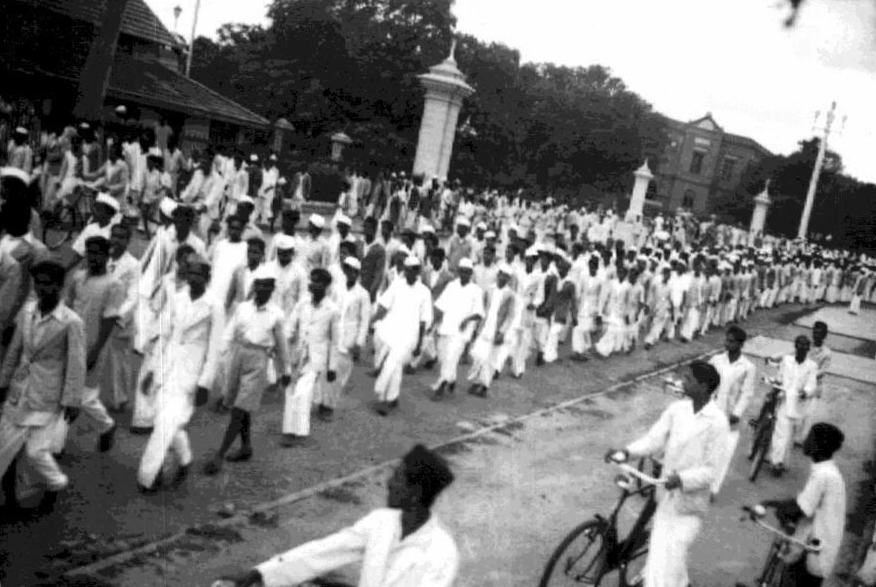
Quit India Movement to end British rule

Political
3 min read
Updated By: History Editorial Network (HEN)
Published:
In the midst of World War II, amidst a growing discontent with British colonial rule in India, the Quit India Movement emerged. The Indian National Congress, led by Mahatma Gandhi, called for immediate British withdrawal from the country. This marked a significant turning point in India's struggle for independence.
The Quit India Movement aimed to launch a massive civil disobedience campaign, urging Indians to nonviolently resist British authority. The British responded with force, arresting tens of thousands of Indian nationalists, including top leaders like Gandhi himself. Despite facing harsh repression, Indians across the country joined the movement, leading to strikes, protests, and acts of sabotage against British institutions.
The impact of the Quit India Movement was profound. It united Indians from all walks of life in a common goal of achieving independence. The British government, already strained by the demands of World War II, faced growing pressure to address Indian grievances. The movement brought international attention to the Indian freedom struggle, weakening the legitimacy of British colonial rule.
Ultimately, the Quit India Movement paved the way for India's independence in the years that followed. It demonstrated the power of nonviolent resistance in achieving political change and inspired future movements for freedom and justice around the world.
#QuitIndiaMovement #IndianIndependence #NonviolentResistance #BritishColonialism
Explore the Life Moments of
 AI Twin