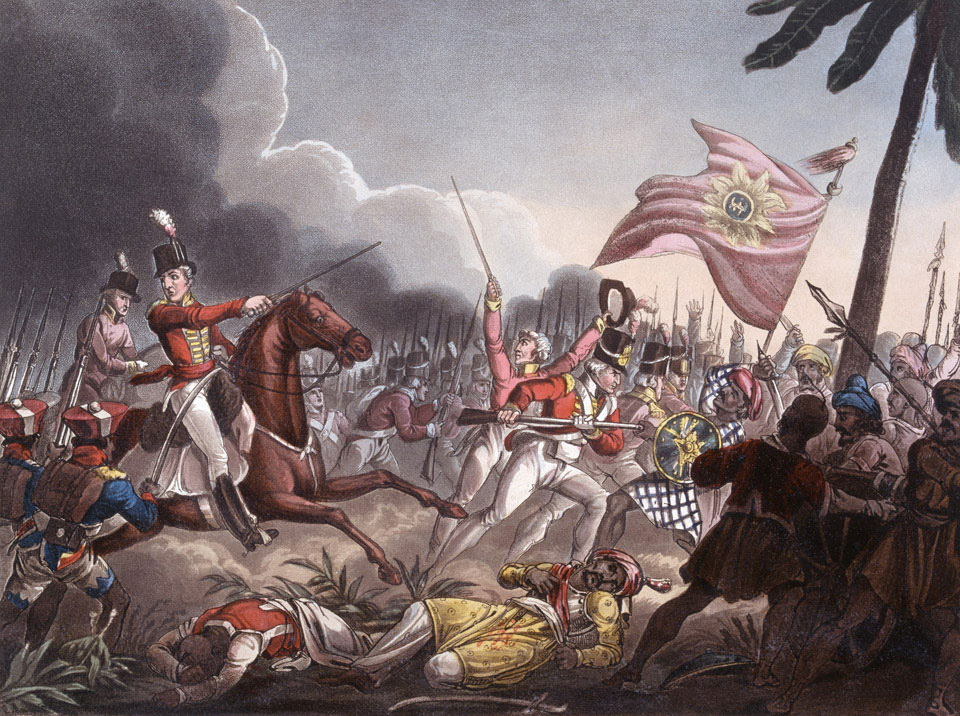
Capture of Delhi by British in Second Anglo-Maratha War
Political
4 min read
Updated By: History Editorial Network (HEN)
Published:
During the Second Anglo-Maratha War, the Battle of Delhi unfolded, leading to the British forces' successful capture of the city. The conflict emerged as a result of the Maratha Empire's decline and the British East India Company's ambitions to expand its influence. The British troops, under General Gerard Lake, faced off against the Maratha army near Delhi.
The battle was fierce, with both sides engaging in intense fighting. Despite the Marathas' initial resistance, the superior tactics and firepower of the British forces ultimately triumphed. The capture of Delhi was a strategic victory for the British, enabling them to establish control over the Mughal capital and weaken the Maratha Empire's grip on northern India.
The aftermath of the Battle of Delhi had far-reaching consequences. The Marathas suffered a significant blow to their power, paving the way for further British expansion in India. The capture of Delhi solidified the British East India Company's dominance in the region and marked a significant turning point in the subcontinent's history.
In the wake of the battle, Delhi underwent a transformation under British rule. The Mughal Emperor Shah Alam II, who had initially allied with the Marathas, was reinstated as a symbolic figurehead under British protection. The city became a key administrative center for the British administration in India.
The Battle of Delhi during the Second Anglo-Maratha War reshaped the political landscape of India, setting the stage for British colonial rule in the years to come. It exemplified the shifting power dynamics in the subcontinent and the British East India Company's growing influence. The capture of Delhi underscored the strategic importance of the city and its symbolic significance in shaping India's colonial history.
#BattleOfDelhi #BritishCapture #AngloMarathaWar #ColonialIndia

Explore the Life Moments of
 AI Twin