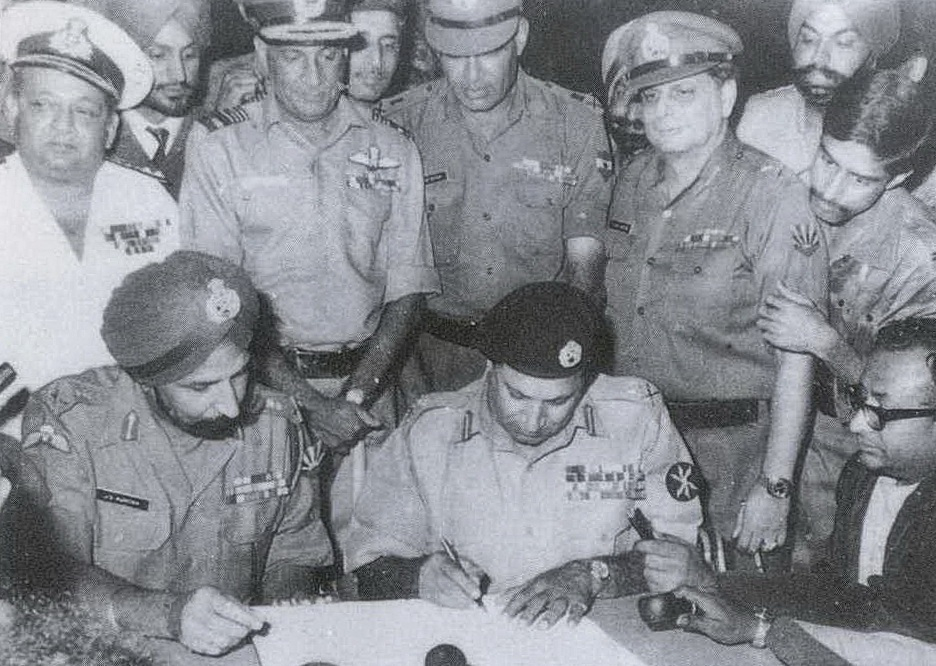
Indo-Pakistani War Resulting in Bangladesh's Liberation
Political
Global Trade
4 min read
Updated By: History Editorial Network (HEN)
Published:
Updated:
In 1971, the Indo-Pakistani War erupted, resulting in the eventual liberation of Bangladesh. The conflict stemmed from longstanding political and cultural tensions between East and West Pakistan. The people of East Pakistan, later known as Bangladesh, felt marginalized and oppressed by the central government in West Pakistan. The calls for autonomy and self-governance led to a violent crackdown by the Pakistani military in East Pakistan, triggering a humanitarian crisis.
India, in support of the Bangladeshi independence movement, intervened in the conflict by providing military assistance to the Mukti Bahini, the Bangladeshi freedom fighters. The Indian armed forces launched a strategic offensive against Pakistan, leading to a decisive victory. The Pakistani forces surrendered, resulting in the emergence of an independent Bangladesh.
The liberation of Bangladesh had profound implications for the region. It marked a significant shift in power dynamics in South Asia and reshaped the geopolitical landscape. The war also highlighted the importance of self-determination and the right to sovereignty for all nations.
The Indo-Pakistani War and the subsequent liberation of Bangladesh remain a pivotal moment in the history of the Indian subcontinent, symbolizing the triumph of freedom over oppression and the resilience of the human spirit in the face of adversity. It stands as a testament to the sacrifices made by those who fought for the independence and sovereignty of Bangladesh.
#IndoPakistaniWar #LiberationOfBangladesh #GeopoliticalShift #SelfDetermination #TriumphOfFreedom
Explore the Life Moments of
 AI Twin