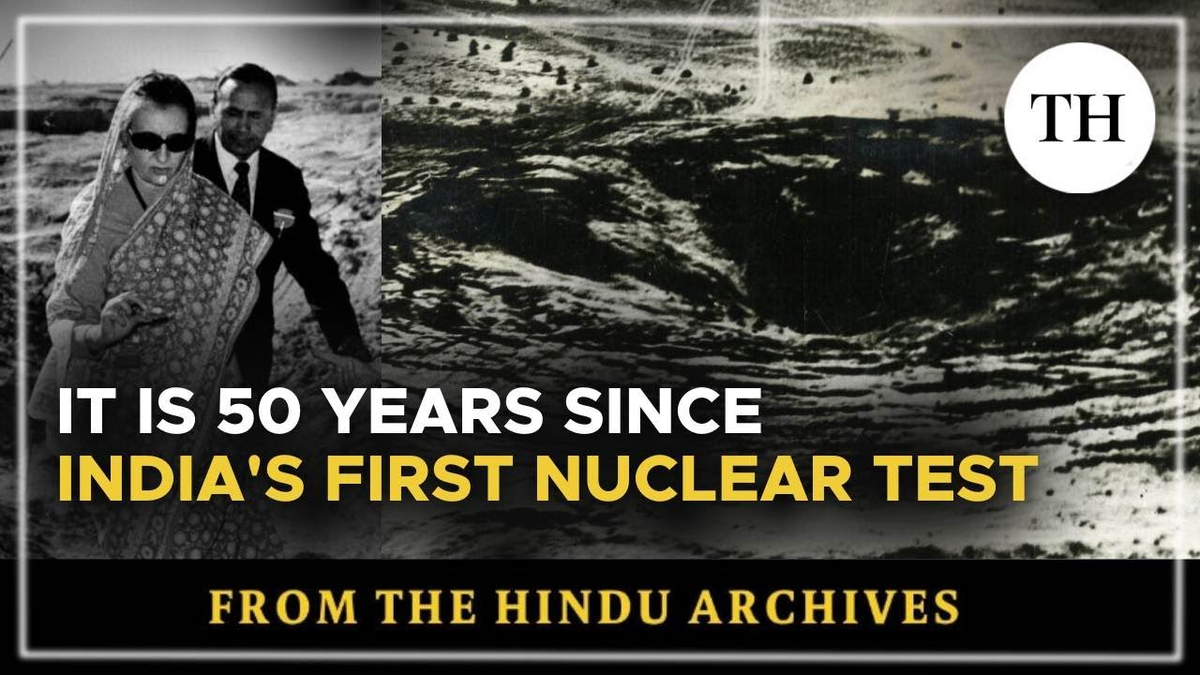
First underground nuclear test by India.

Global Security
Political
4 min read
Updated By: History Editorial Network (HEN)
Published:
In 1974, India conducted its first successful underground nuclear test, joining the group of countries with nuclear capabilities. The test, code-named 'Smiling Buddha,' took place at the Pokhran Test Range in the desert region of Rajasthan. This event marked a significant milestone in India's nuclear program.
The decision to conduct the test was driven by concerns over security and the perceived need for deterrence against potential threats. It was also seen as a demonstration of India's scientific and technological capabilities on the global stage.
The test had immediate repercussions in the international community, with countries expressing various reactions ranging from concern to condemnation. The United States and other nations called for restraint and non-proliferation efforts in the wake of the test. However, India defended its actions as a matter of national security and sovereignty.
Domestically, the test was met with a sense of pride and patriotism among many Indians. It was seen as a symbol of India's progress and a sign of its ability to assert itself as a major player in global politics.
The underground nuclear test by India had long-term implications for regional security dynamics, particularly in South Asia. It prompted neighboring countries, such as Pakistan, to accelerate their own nuclear weapons development programs, leading to a nuclear arms race in the region.
In conclusion, India's first underground nuclear test in 1974, known as 'Smiling Buddha,' had far-reaching consequences both at home and abroad. It showcased India's nuclear capabilities and sparked debates and concerns about nuclear proliferation and regional security.
#India #NuclearTest #Pokhran #SouthAsia #GlobalSecurity

Explore the Life Moments of
 AI Twin