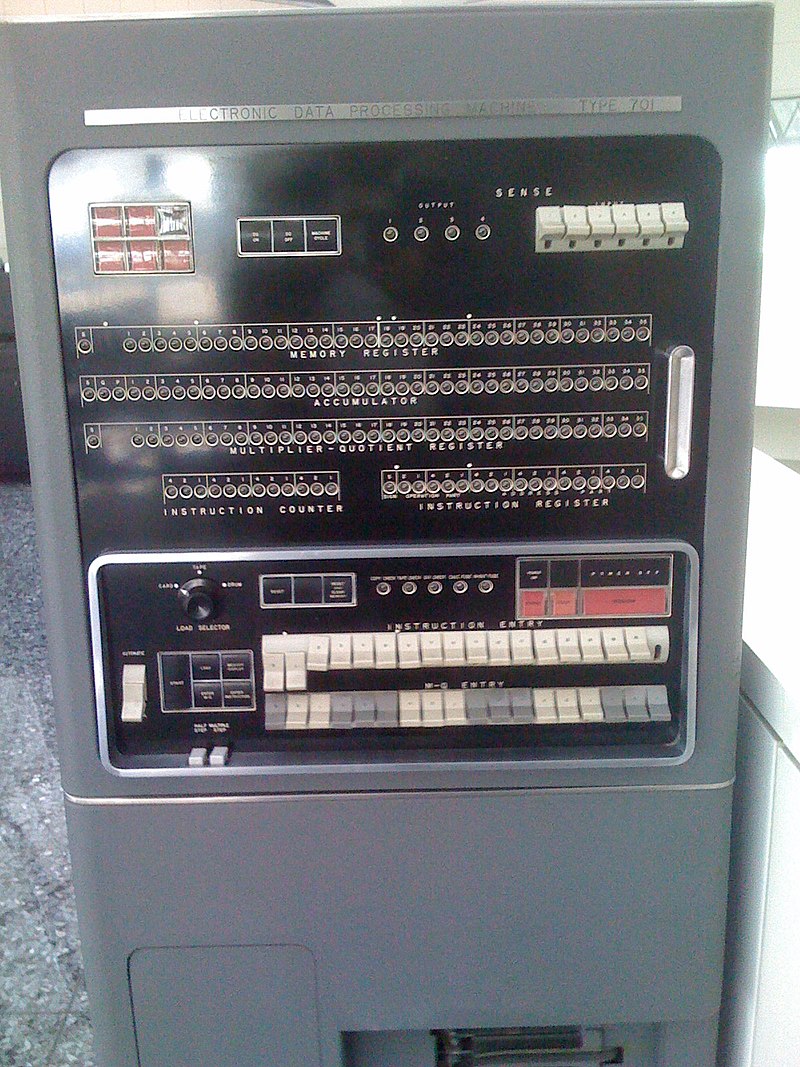
IBM Offered Its First Commercial Stored-Program Computer
New York, United States
Computing Technology
History of Computing
IBM Innovations
4 min read
Updated By: History Editorial Network (HEN)
Published:
Updated:
IBM's introduction of the IBM 701 marked a pivotal development in the evolution of computing technology. The IBM 701 was the company's first commercial stored-program computer, utilizing vacuum tube technology. This innovation allowed for more complex and efficient processing of data compared to earlier computing machines, which were primarily electromechanical. The IBM 701 was designed to meet the needs of scientific and engineering applications, providing a platform for advanced calculations and data processing. Its architecture supported the concept of storing instructions in memory, which was a departure from the earlier methods of programming that relied on physical rewiring or manual input of instructions. This capability laid the groundwork for future developments in computer design and programming methodologies.
The impact of the IBM 701 extended beyond its immediate technological advancements. It represented a shift in the computing landscape, as businesses and research institutions began to recognize the potential of electronic computers for various applications. The introduction of the IBM 701 also contributed to the growth of the computer industry, as it encouraged further research and development in computer technology. The success of the IBM 701 led to subsequent models and innovations, including the IBM 305 RAMAC, which introduced the hard disk drive. This evolution in computing technology not only transformed how data was processed but also set the stage for the modern computing era, influencing the design and functionality of computers that followed.
#mooflife
#MomentOfLife
#Ibm701
#Stored-programComputer
#VacuumTubeTechnology
#ComputerHistory
#ComputingTechnology

Explore the Life Moments of
 AI Twin