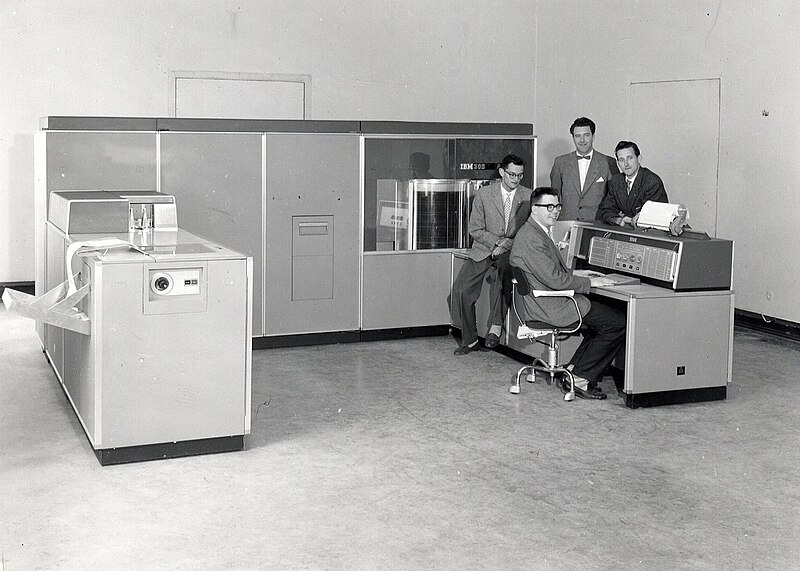
IBM 305 RAMAC Introduced the Hard Disk Drive
unknown, Laharighat, Marigaon, Assam, India
Technology
Data Storage
4 min read
Updated By: History Editorial Network (HEN)
Published:
Updated:
The IBM 305 RAMAC marked a pivotal advancement in data storage technology with the introduction of the first hard disk drive. This innovation allowed for the storage of large amounts of data in a compact format, significantly enhancing the efficiency of data management. Prior to this development, data was primarily stored on magnetic tape, which was slower and less reliable. The RAMAC's hard disk drive utilized a series of magnetic disks to store data, enabling random access to information, which was a major improvement over sequential access methods. This capability transformed how businesses and organizations managed their data, leading to faster processing times and improved operational efficiency. The RAMAC could store up to 5 megabytes of data, a substantial amount at the time, and it featured a read/write mechanism that allowed for quick retrieval and storage of information.
The impact of the IBM 305 RAMAC extended beyond just technological advancement; it laid the groundwork for future developments in data storage and computing. The hard disk drive became a standard component in computers, influencing the design and functionality of subsequent systems. As data storage needs grew, the principles established by the RAMAC were built upon, leading to the development of larger and more efficient hard drives. This innovation also contributed to the growth of the computing industry, as businesses began to adopt computers for data processing, leading to increased productivity and the emergence of new applications in various sectors. The introduction of the hard disk drive by IBM not only revolutionized data storage but also set the stage for the digital age, where data management became a critical aspect of business operations and technological advancement.
#mooflife
#MomentOfLife
#Ibm305Ramac
#HardDiskDrive
#DataStorageTechnology
#ComputingHistory
#DataManagement

Explore the Life Moments of
 AI Twin