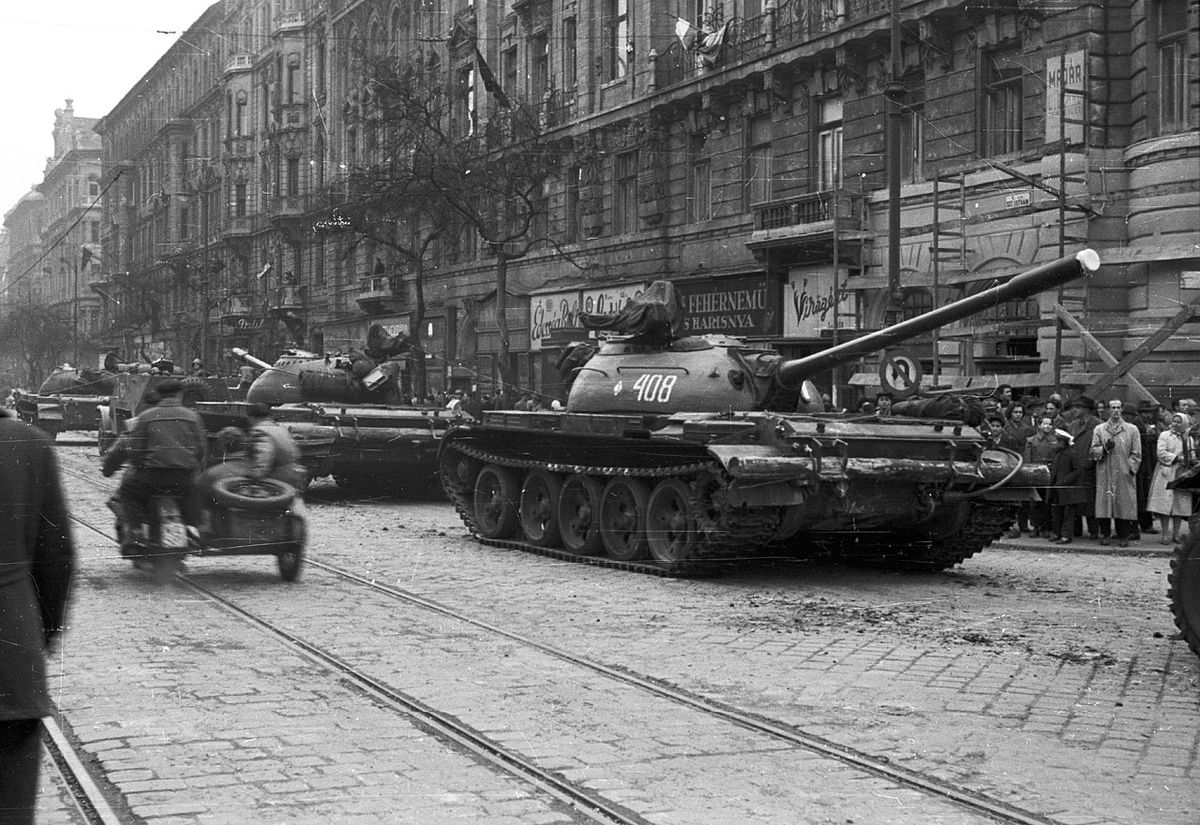
Soviet Troop Withdrawal from Hungary: The Cold War Ends
Hungary

Global Trade
Political
5 min read
Updated By: History Editorial Network (HEN)
Published:
In the later stages of the 20th century, Eastern Europe experienced a critical transformation. One key event was the withdrawal of Soviet troops from Hungary. This marked a pivotal shift, bringing an end to the Cold War era's military occupations.
Background to this movement stems from the lingering presence of Soviet forces in Hungary since the end of World War II. Their presence was part of a broader Soviet strategy to maintain influence in Eastern Europe, ensuring a buffer zone against Western countries. This military presence was a symbol of Soviet authority and domination over Hungary's political and social landscape.
As political dynamics evolved, the 1980s saw a growing push for national sovereignty and democratic reforms across Eastern Europe. Hungary was no exception. The reformist wave gained momentum, encouraged by the policies of Soviet leader Mikhail Gorbachev, who introduced 'glasnost' (openness) and 'perestroika' (restructuring). These policies aimed at revitalizing the Soviet Union inadvertently empowered satellite states to pursue their independent paths.
The decision for Soviet troop withdrawal from Hungary followed negotiations between the Hungarian government and Soviet authorities. The movement was not abrupt but rather systematic, with an orderly and phased drawdown. It indicated a shift towards Hungarian autonomy and self-determination. This action was emblematic of the weakening grip of the Soviet Union over Eastern Europe.
The impact of the withdrawal was profound. It not only symbolized an end to decades of Soviet military presence but also marked Hungary's transition toward a more democratic and independent state. This event was warmly welcomed by the Hungarian population, who saw it as a significant step toward national sovereignty and integration into broader European structures.
Statistics affirming the extent of the withdrawal include the reduction of Soviet military personnel from Hungary, reverting to pre-World War II levels. This transition paved the way for subsequent political and economic reforms, contributing to Hungary's aspirations for integration with Western Europe and NATO.
Concluding, the withdrawal of Soviet troops from Hungary was a defining moment that underscored the end of an era, fostering a new chapter in Hungarian and European history. #ColdWarEnd #SovietWithdraw #Hungary #GeopoliticalShift #MoofLife
Primary Reference
Fall of Communism in Eastern Europe, 1989

Explore the Life Moments of
 AI Twin