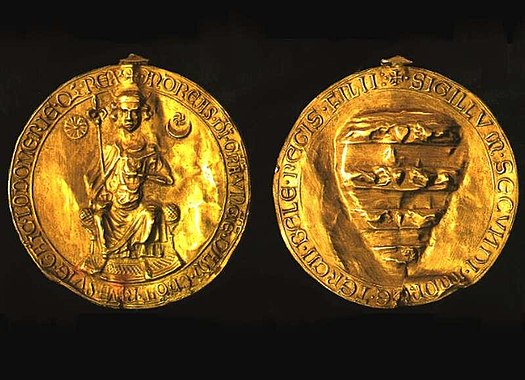
Royal power limited by Golden Bull of 1222 - nobility rights established by King Andrew II
Hungary

Political
5 min read
Updated By: History Editorial Network (HEN)
Published:
King Andrew II of Hungary, facing increasing discontent among his nobles due to perceived overreach and mismanagement of royal power, proclaimed the Golden Bull. This document was a response to the conflicts and tensions that had been brewing between the monarchy and the nobility. The nobles had grown frustrated with the king’s policies, which included lavish spending, heavy taxation, and frequent grants of land to foreign barons and relatives, weakening their own power and resources.
To address these grievances, the Golden Bull established a set of regulations aimed at limiting the king’s authority while enshrining the rights and privileges of the nobles. Key points included the prohibition of the alienation of royal lands without the consent of the nobles, restrictions on foreign advisors at the Hungarian court, and the stipulation that the king could not levy new taxes without the consent of the Diet, the assembly of nobles.
The impact of this proclamation was multifaceted. For the nobles, it was a significant victory, ensuring checks on royal power and protecting their economic interests. The Golden Bull also stipulated that the king must convene the Diet annually, providing a formal platform for the nobles to voice their concerns and exert influence. Additionally, it included a clause allowing the nobility to legally resist the monarchy if the king violated the terms of the Bull, a profound assertion of their rights.
For the monarchy, the Golden Bull marked a clear boundary in the exercise of its powers. While it diminished some aspects of royal prerogatives, it also helped stabilize the kingdom by addressing the causes of noble unrest. This balance of power laid an early foundation for the development of constitutional governance in Hungary.
The Golden Bull was soon recognized as one of Hungary’s cornerstone legal documents, akin to England's Magna Carta, underscoring the importance of shared governance and the protection of noble privileges. It became a reference point in subsequent centuries and served as a symbol of the enduring struggle for a balanced distribution of power.
The Golden Bull holds historical significance as it reshaped the dynamics of Hungarian governance and set a precedent for future legal frameworks.
#HungaryHistory #NobilityRights #RoyalPowerLimitations #LegalPrecedent #MedievalPolitics #MoofLife
Primary Reference
Golden Bull of 1222 - Wikipedia

Explore the Life Moments of
 AI Twin