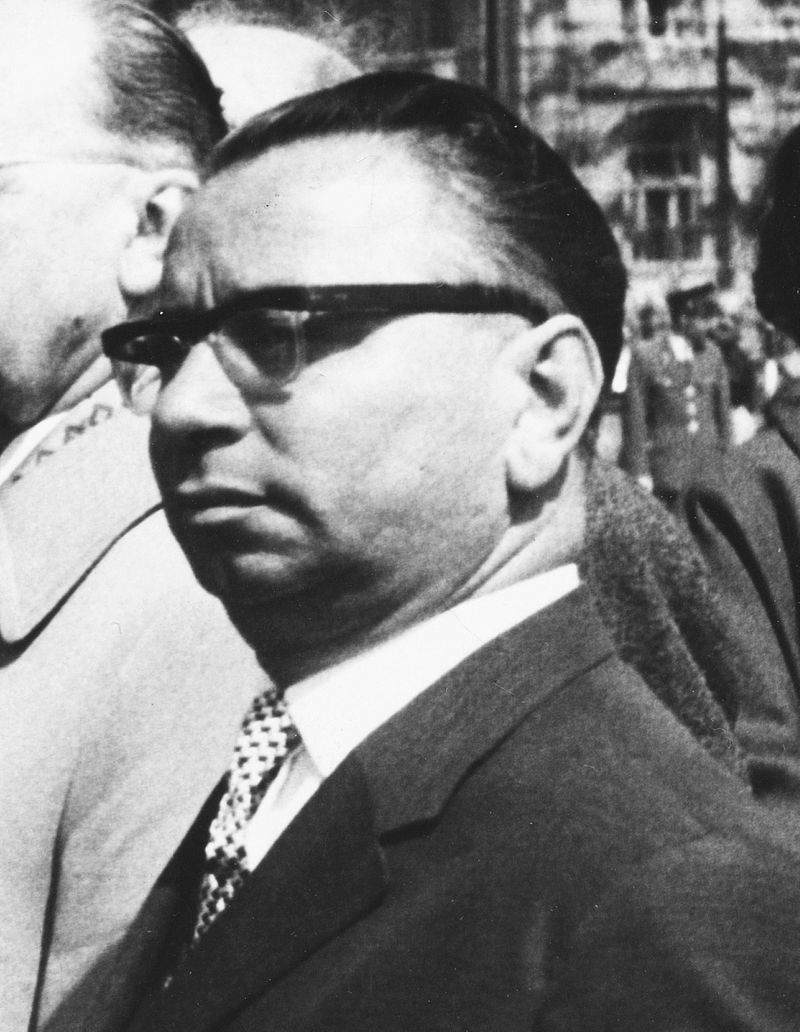
Prime Minister Gyula Kállai's Resignation
Hungary
Political
Economic Policy
5 min read
Updated By: History Editorial Network (HEN)
Published:
Gyula Kállai's resignation from his position as Prime Minister of Hungary was a pivotal event in Hungarian political history. Before his resignation, Kállai had been a prominent figure in Hungarian politics, serving as Prime Minister during a period marked by political and economic reforms. His tenure saw significant efforts to align Hungary more closely with Soviet policies while attempting to stabilize the nation's economy through controlled economic reforms.
Kállai's political career was deeply intertwined with Hungary's post-World War II transformation. He became a member of the Hungarian Communist Party and later played a crucial role during the Hungarian Revolution of 1956. Following the suppression of the revolution, Hungary underwent numerous reforms under Soviet influence, and Kállai held various positions of responsibility that helped to shape the course of the nation's political landscape.
One of the critical aspects of Kállai's time in office was his governance approach amidst the complex dynamics of Warsaw Pact countries. He worked on policies aimed at economic decentralization and attempted to introduce partial liberalization in an effort to boost Hungary's economic performance without deviating significantly from the Soviet model. These measures included limited market-oriented reforms that tried to increase productivity and reduce inefficiencies, but they were met with mixed results.
Upon resigning, Kállai's departure signaled a shift in Hungary’s political context. His resignation marked the end of an era characterized by cautious reform and the beginning of a new phase of leadership under János Kádár. Kádár's leadership would later pursue more extensive economic reforms, known as the New Economic Mechanism, which sought to provide greater autonomy to enterprises and introduce market-like practices within the framework of socialism.
Kállai’s resignation had a notable impact on Hungary’s political trajectory, influencing future governance and policies. His time in office is often remembered for attempting to balance Soviet alignment with the need for economic improvement. The legacy of his governance includes the nuanced approach to reform that would shape subsequent policy decisions in Hungary.
#HungarianPolitics #CommunistEra #PoliticalReform #EconomicPolicy #SovietInfluence #LeadershipChange #MoofLife
Primary Reference
Vietnam from Cease-Fire to Capitulation

Explore the Life Moments of
 AI Twin