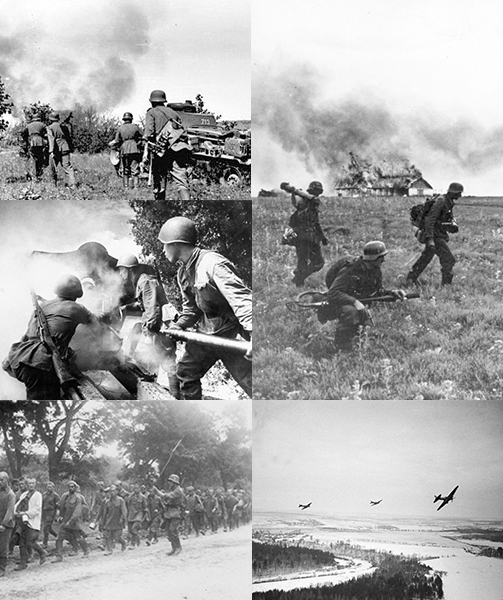
Hungary's Participation in Operation Barbarossa
Hungary
Political
Military
5 min read
Updated By: History Editorial Network (HEN)
Published:
In the context of World War II, Hungary declared war on the Soviet Union and joined Operation Barbarossa, the codename for the Axis invasion of the Soviet Union initiated by Nazi Germany. This decision marked Hungary's further involvement in the Axis powers' military operations. Hungary, under the leadership of Admiral Miklós Horthy, aligned more closely with Nazi Germany, partly due to political pressures and territorial ambitions.
Prior to this development, Hungary had already been a member of the Tripartite Pact with Germany, Italy, and Japan, aligning itself with Axis ideologies. The government's decision to participate in Operation Barbarossa resulted from a combination of geopolitical strategy and the desire to reclaim territories lost after World War I. Hungarian military units, including the Second Army, were mobilized to support the German offensive on the Eastern Front.
The involvement of Hungary added an additional layer to the Axis offensive, impacting both military operations and subsequent political dynamics in Eastern Europe. Analysts note that approximately 200,000 Hungarian soldiers were engaged in the invasion, with significant resource allocations toward the war effort. The collaboration with German forces subjected Hungarian troops to immense challenges, leading to substantial losses. Historical records cite that around 120,000 Hungarian soldiers were killed or missing by the time the campaign ended.
The declaration significantly impacted Hungary domestically and internationally. The engagement strained the country's military resources and deepened its involvement in the broader European conflict. On the home front, the war efforts led to economic hardships, resource shortages, and increased political dependency on Nazi Germany.
The consequences of Hungary's participation in Operation Barbarossa were profound. The military losses weakened Hungary's military capability, and the country's alignment with the Axis powers isolated it diplomatically. Additionally, the long-term repercussions included political upheaval and a shift in Hungary's geopolitical stance following the conclusion of World War II.
#OperationBarbarossa #HungaryWWII #MilitaryHistory #EasternFront #WWIIParticipation #HungarianArmy #AxisPowers #WarDeclaration #MoofLife
Primary Reference
Operation Barbarossa - Wikipedia

Explore the Life Moments of
 AI Twin