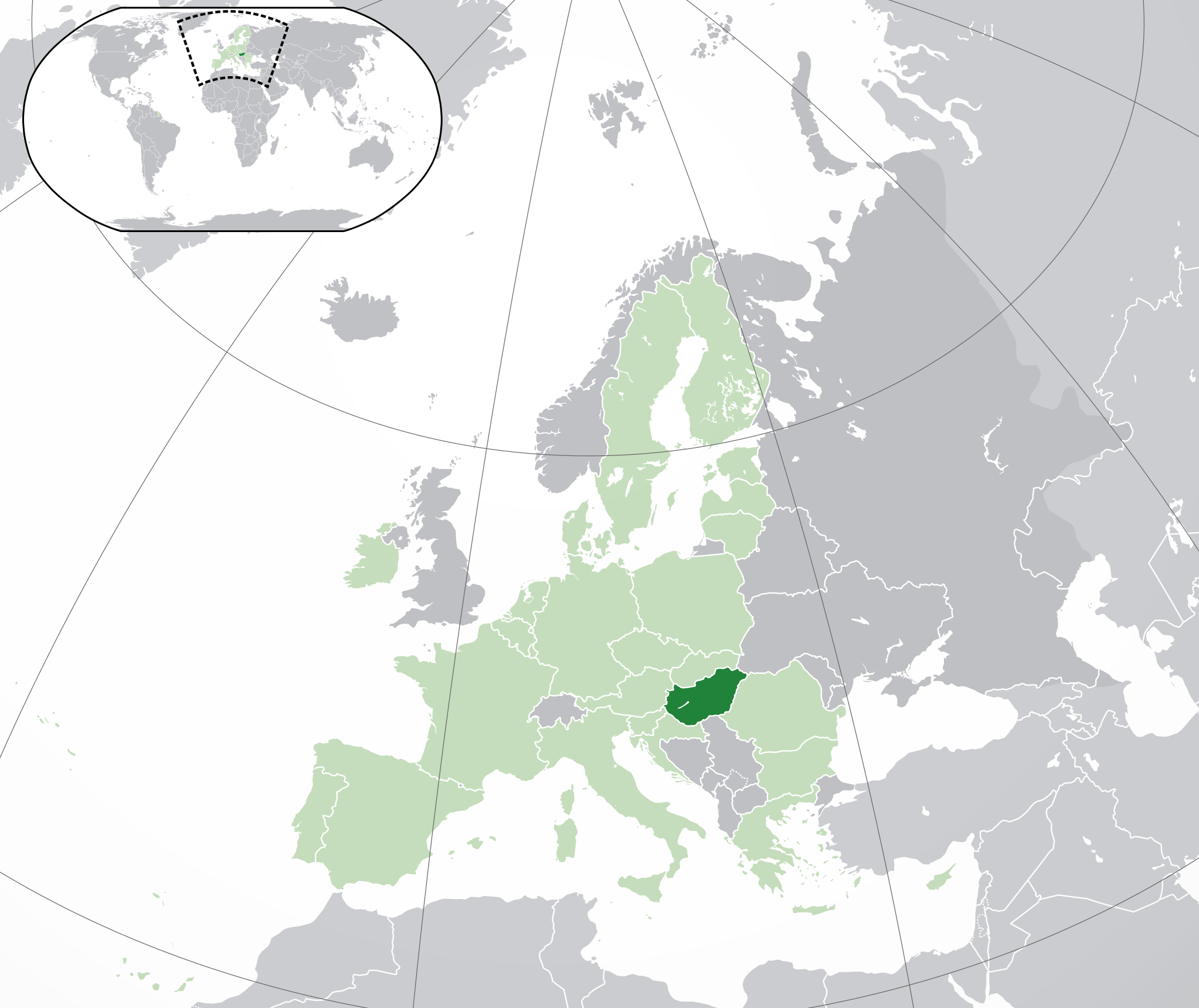
Hungary Joins IMF and World Bank in New Economic Collaboration.
Hungary

Global Trade
Economic Downturn
5 min read
Updated By: History Editorial Network (HEN)
Published:
In the early 1980s, Hungary, facing mounting economic challenges, made a pivotal move to integrate more deeply into the global financial system. The country's economy was strained by extensive foreign debt and inefficiencies within its state-managed sectors. The leadership recognized the critical need for economic reform and international support to stabilize and modernize its financial framework.
Amidst this backdrop, Hungary formally joined the International Monetary Fund (IMF) and the World Bank. This membership marked Hungary as the first Eastern Bloc country to take this step. The decision to join these institutions was driven by the necessity to restore fiscal balance and gain access to international financial resources and expertise.
By aligning with the IMF and World Bank, Hungary aimed to implement structural adjustments and gain credibility among Western investors. The IMF’s involvement typically came with conditions promoting market-oriented reforms, which Hungary adopted to some extent. The World Bank provided technical assistance and funding for development projects aimed at improving infrastructure and productivity.
The impact of Hungary's membership was multifaceted. Economically, it facilitated access to loans and financial assistance that were crucial for alleviating immediate fiscal pressures. It also heralded a gradual shift towards a more open and competitive economic environment. Politically, it signaled Hungary’s willingness to engage with Western economic systems, which had significant implications during the Cold War era.
Statistics from the period indicate that Hungary's external debt had become unsustainable, necessitating approximately $1 billion in financial aid. The IMF and World Bank's support proved instrumental in stabilizing the economy and paving the way for subsequent reforms.
Hungary's membership in these international bodies was a strategic decision, reflecting its broader objectives of economic recovery and integration into the global market. The move laid the groundwork for future transitions and underscored the importance of international cooperation in addressing national economic challenges.
#HungaryEconomy #IMFWorldBank #EconomicReform #ColdWarEconomics #MoofLife
Primary Reference
IMF - Resident Representative Office in Hungary

Explore the Life Moments of
 AI Twin