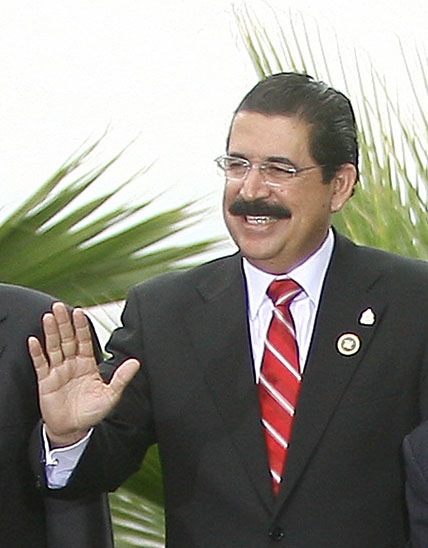
Manuel Zelaya: President of Honduras
Honduras

Political
Social Reforms
4 min read
Updated By: History Editorial Network (HEN)
Published:
Manuel Zelaya swore in as President of Honduras following a contentious election. Zelaya, a member of the Liberal Party, won the presidency promising to address the country's social inequalities and poverty. His victory marked a shift in Honduran politics toward more progressive policies.
Zelaya's presidency was marred by political controversies and tensions with the traditional elite. He implemented social programs to benefit the impoverished population, such as subsidies for basic goods and education initiatives. However, his reforms were met with resistance from powerful business interests and political opponents. Zelaya's attempts to change the constitution to allow for reelection also sparked widespread protests and opposition.
In 2009, Zelaya was ousted in a military coup and exiled from the country. The coup was condemned by the international community, leading to Honduras' isolation and suspension from the Organization of American States. The interim government that took power was criticized for its human rights abuses and lack of legitimacy.
Zelaya's presidency and subsequent removal polarized Honduran society, highlighting the deep-seated political divisions in the country. His supporters viewed him as a champion of the poor and marginalized, while his detractors saw him as a threat to democracy and stability.
The events surrounding Zelaya's presidency have had long-lasting repercussions for Honduras, including political instability, economic uncertainty, and ongoing social unrest. The legacy of his presidency continues to shape the country's political landscape and influence future decisions.
#ManuelZelaya #HondurasPresident #PoliticalControversy #SocialReforms #Coup #PoliticalDivisions #InternationalResponse #Legacy

Explore the Life Moments of
 AI Twin