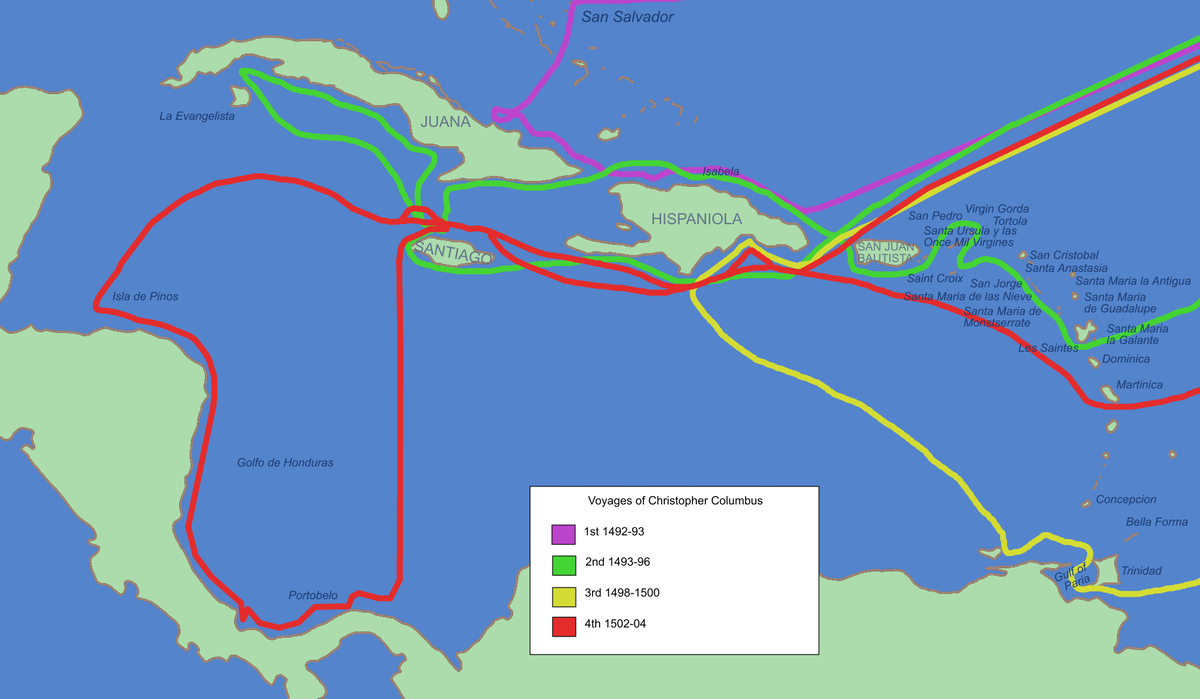
Discovery of Bay Islands by Christopher Columbus during the fourth voyage.
Honduras

European Colonization
4 min read
Updated By: History Editorial Network (HEN)
Published:
During his fourth voyage to the Americas, Christopher Columbus arrived at the Bay Islands of Honduras. The Bay Islands were already inhabited by the Paya and Lenca indigenous groups, who had been living in the region for centuries. Columbus and his crew were searching for a route to the Pacific Ocean, hoping to find a passage to the lucrative spice markets of Asia.
The arrival of Columbus to the Bay Islands had a significant impact on the indigenous populations. The Europeans brought with them diseases to which the natives had no immunity, leading to devastating consequences for the local communities. In addition, the arrival of the Europeans marked the beginning of the Spanish colonization of the region, which would have far-reaching effects on the culture and traditions of the indigenous peoples.
Despite not finding the passage to Asia that he was looking for, Columbus' voyage to the Bay Islands of Honduras had lasting implications for the region. The Spanish eventually established colonies in Honduras, bringing with them Catholicism, new technologies, and a new way of life that would forever change the landscape of the Bay Islands.
Today, the Bay Islands of Honduras are known for their stunning natural beauty and rich cultural heritage. The indigenous populations have managed to preserve many of their traditions despite the influence of European colonization. The arrival of Christopher Columbus to the Bay Islands of Honduras marked a turning point in the history of the region, shaping its future in ways that are still felt today.
#ChristopherColumbus #BayIslands #Honduras #EuropeanColonization #IndigenousCulture #SpanishColonization

Explore the Life Moments of
 AI Twin