Pasteur’s Airborne Microbe Discovery in Paris
Paris, France
Microbiology
History of Science
Pathology
6 min read
Updated By: History Editorial Network (HEN)
Published:
Updated:
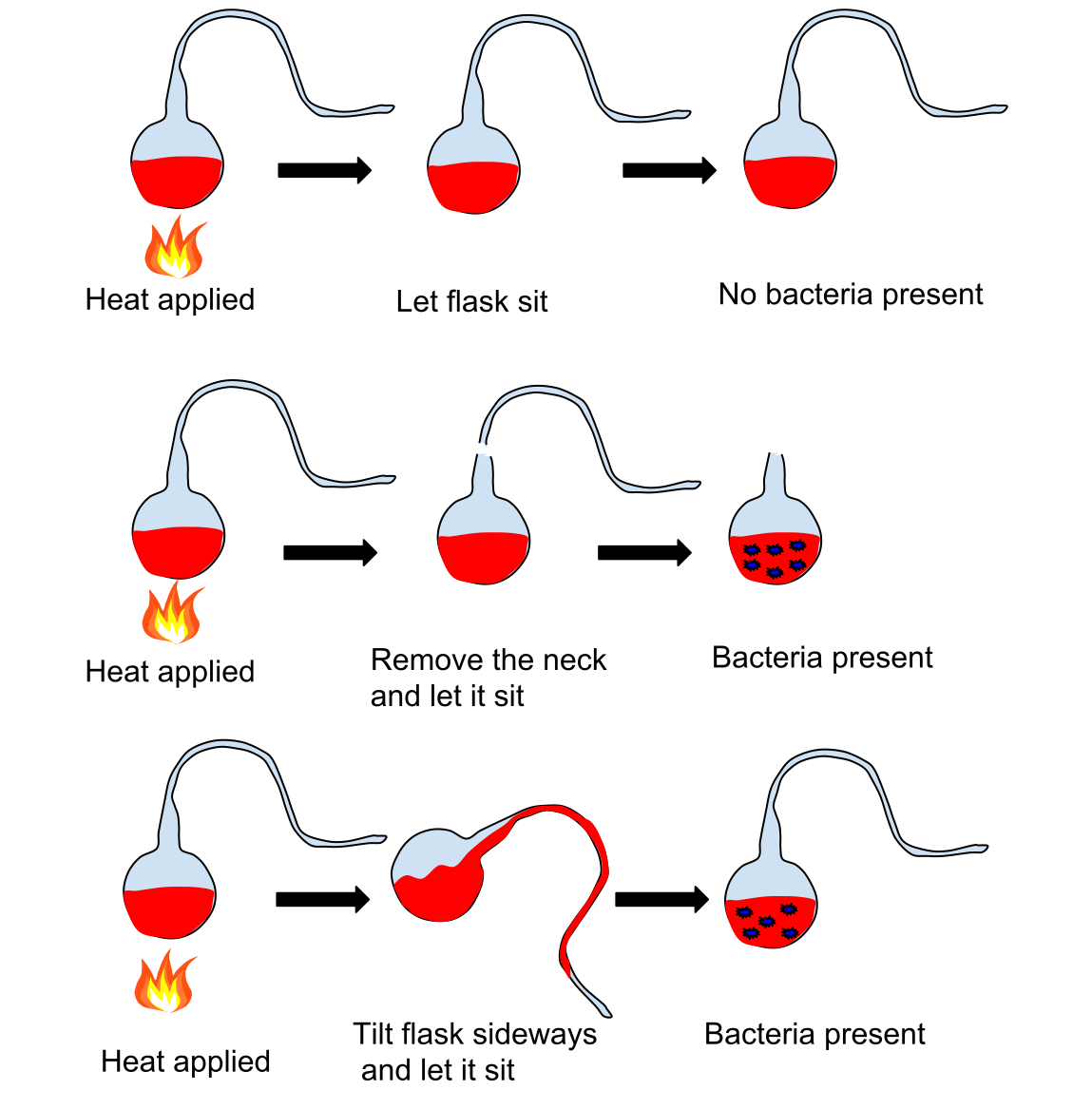
French chemist and microbiologist Louis Pasteur publicly presented the results of his swan-neck flask experiment at the Sorbonne in Paris, offering clear experimental evidence that microorganisms in the air-not the air itself-were responsible for the spoilage of liquids. The demonstration became one of the foundational experiments supporting the germ theory of disease and challenging the long-held belief in spontaneous generation. During the mid-19th century, many scientists still supported the theory of spontaneous generation, which claimed that living organisms could arise from non-living matter. Pasteur designed a controlled experiment to test this idea. He placed nutrient-rich broth into specially designed glass flasks with long, curved necks resembling a swan’s neck. The broth was boiled to kill any existing microorganisms. Because of the curved neck, air could enter the flask, but airborne dust particles and microbes became trapped in the bend of the glass.
In intact swan-neck flasks, the sterilized broth remained clear and free of microbial growth for extended periods. However, when the neck was broken off or the flask was tilted so that the broth came into contact with trapped particles, microbial growth quickly appeared. These observations demonstrated that contamination came from particles carried in the air, not from air itself. Pasteur repeated the experiment multiple times to confirm the consistency of the results. Pasteur’s findings built upon earlier challenges to spontaneous generation, including work by Italian scientist Francesco Redi in the 17th century and Lazzaro Spallanzani in the 18th century. However, Pasteur’s flask design directly addressed criticisms that sealing containers prevented a “vital force” in air from reaching the broth. By allowing air in while preventing microbial contamination, he demonstrated that life did not arise spontaneously in sterile conditions.
The experiment provided critical experimental support for the germ theory of disease, later expanded by scientists such as Robert Koch, who identified specific pathogens responsible for diseases including tuberculosis and cholera. Pasteur’s work also led to practical applications in food safety. His studies on fermentation and microbial spoilage resulted in the development of pasteurization, a controlled heating process designed to reduce harmful microorganisms in beverages such as wine and milk. By disproving spontaneous generation under controlled conditions and showing that microbial contamination originated from airborne particles, Pasteur’s 1864 demonstration established a reproducible scientific method for studying microorganisms and laid groundwork for modern microbiology and public health practices.
#mooflife
#MomentOfLife
#Pasteur
#BacterialFermentation
#Anthrax
#Microbiology
#GermTheory
Primary Reference
Louis Pasteur

Explore the Life Moments of
 AI Twin