Understanding the Moon's Shine and Aryabhata's Insights
India
Science
Astronomy
3 min read
Updated By: History Editorial Network (HEN)
Published:
Updated:
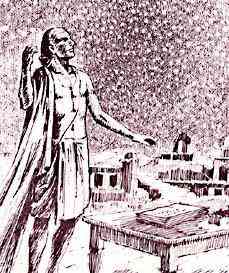
Aryabhata, an ancient Indian mathematician and astronomer, made notable contributions to our understanding of celestial phenomena, including the nature of the Moon's shine. He proposed that the Moon shines due to reflected sunlight, a concept that aligns with modern scientific understanding. This insight was part of his broader work, where he also described the Earth's rotation on its axis and the westward motion of stars. Aryabhata's assertion that the Earth is a sphere with a circumference of approximately 24,835 miles (39,967 km) was groundbreaking for his time and laid the foundation for future astronomical studies. His work emphasized the importance of observational astronomy and mathematical calculations in understanding the cosmos.
The impact of Aryabhata's insights extends beyond his era, influencing subsequent generations of astronomers and mathematicians. His methods for determining the meridian direction using shadows demonstrated an early understanding of geometry and trigonometry. Aryabhata's contributions are recognized as pivotal in the history of science, particularly in the context of Indian astronomy. His ideas not only advanced the field but also provided a framework for later scholars, such as Varāhamihira, who built upon his findings. The acknowledgment of the Moon's shine as a result of sunlight reflection is a testament to Aryabhata's analytical approach, which continues to resonate in contemporary scientific discourse.
#mooflife
#MomentOfLife
#Aryabhata
#Moon'sShine
#Astronomy
#ReflectedSunlight
#Earth'sRotation

Explore the Life Moments of
 AI Twin