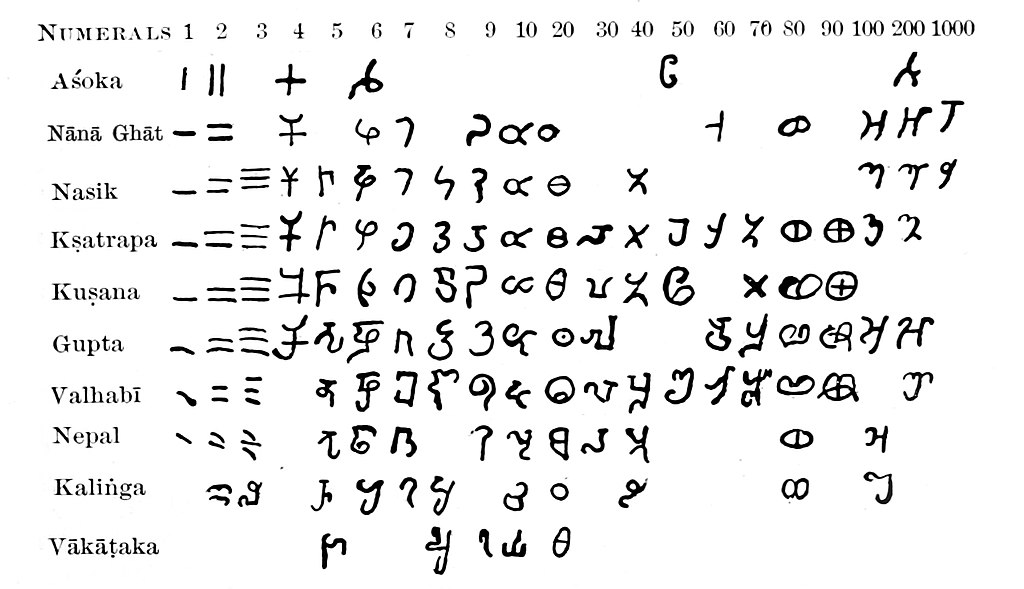
Indian Numerals and Positional Base 10 System
India
Mathematics
Cultural Heritage
3 min read
Updated By: History Editorial Network (HEN)
Published:
Updated:
Indian mathematics experienced significant development during the Gupta Empire, a period marked by advancements in various fields including astronomy, mathematics, and literature. The Indian numeral system, which emerged during this time, is recognized as the first positional base 10 numeral system in the world. This system allowed for the representation of numbers in a way that facilitated calculations and mathematical operations, laying the groundwork for modern arithmetic. The use of a positional system means that the value of a digit is determined by its position within a number, a concept that was revolutionary at the time and has since become a fundamental aspect of mathematics globally. The Surya Siddhanta, an ancient Indian text, includes a sine table that reflects the advanced understanding of trigonometry during this period, further showcasing the mathematical prowess of Gupta scholars. Aryabhata, a prominent mathematician and astronomer, contributed significantly to this field through his work, the Aryabhatiya, which included various mathematical concepts and methods that influenced future generations of mathematicians.
#mooflife
#MomentOfLife
#IndianNumerals
#PositionalBase10System
#GuptaEmpire
#Aryabhata
#IndianMathematics

Explore the Life Moments of
 AI Twin