Understanding the Evolution of Governance in Guinea-Bissau: From Centralization to Multi-Party Democracy
Guinea Bissau
Politics
Governance
International Relations
3 min read
Updated By: History Editorial Network (HEN)
Published:
Updated:
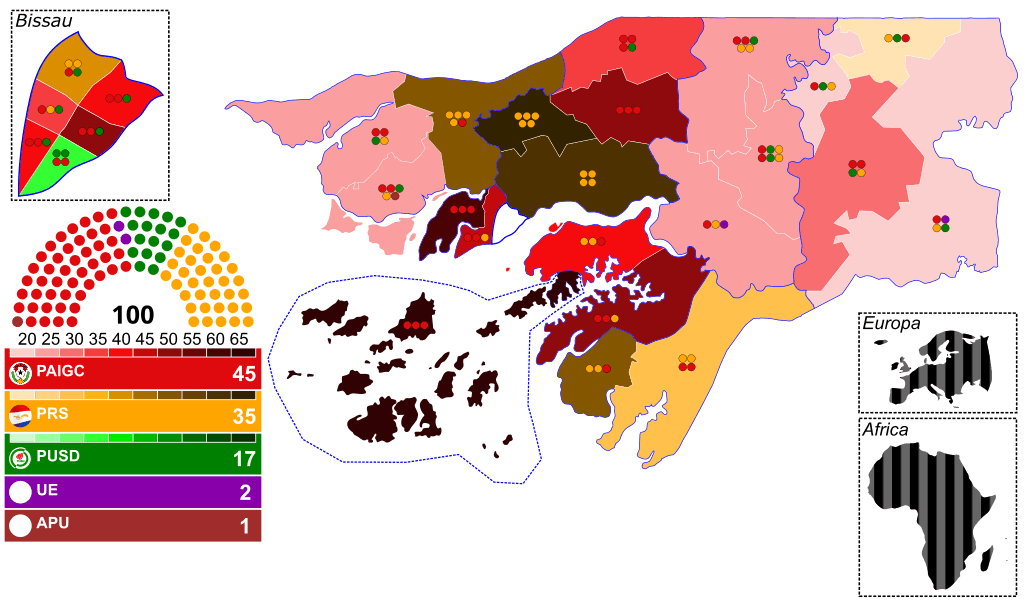
In March 2004, Guinea-Bissau conducted parliamentary elections, marking a significant milestone in the country's ongoing efforts to recover from years of political turmoil and instability. These elections were crucial for restoring democratic governance and aimed at stabilizing the nation after a series of crises, including a civil war from 1998 to 1999 and a military coup in September 2003. The elections were seen as a hopeful step towards rebuilding the political landscape and fostering a more stable environment for economic recovery. Despite the positive outlook surrounding the elections, Guinea-Bissau continued to grapple with numerous challenges, including persistent political instability and the need for economic revitalization. The aftermath of the elections highlighted the complexities of governance in a nation still reeling from the effects of past conflicts, as the new government faced the daunting task of addressing widespread poverty and rebuilding the country's infrastructure. Overall, while the 2004 parliamentary elections were a pivotal moment in Guinea-Bissau's democratic journey, the road to stability and prosperity remained fraught with obstacles.
#Mooflife #Mof #MomentOfLife #Guinea-bissau #ParliamentaryElections2004 #PoliticalStability #EconomicRecovery #DemocraticGovernance

Explore the Life Moments of
 AI Twin