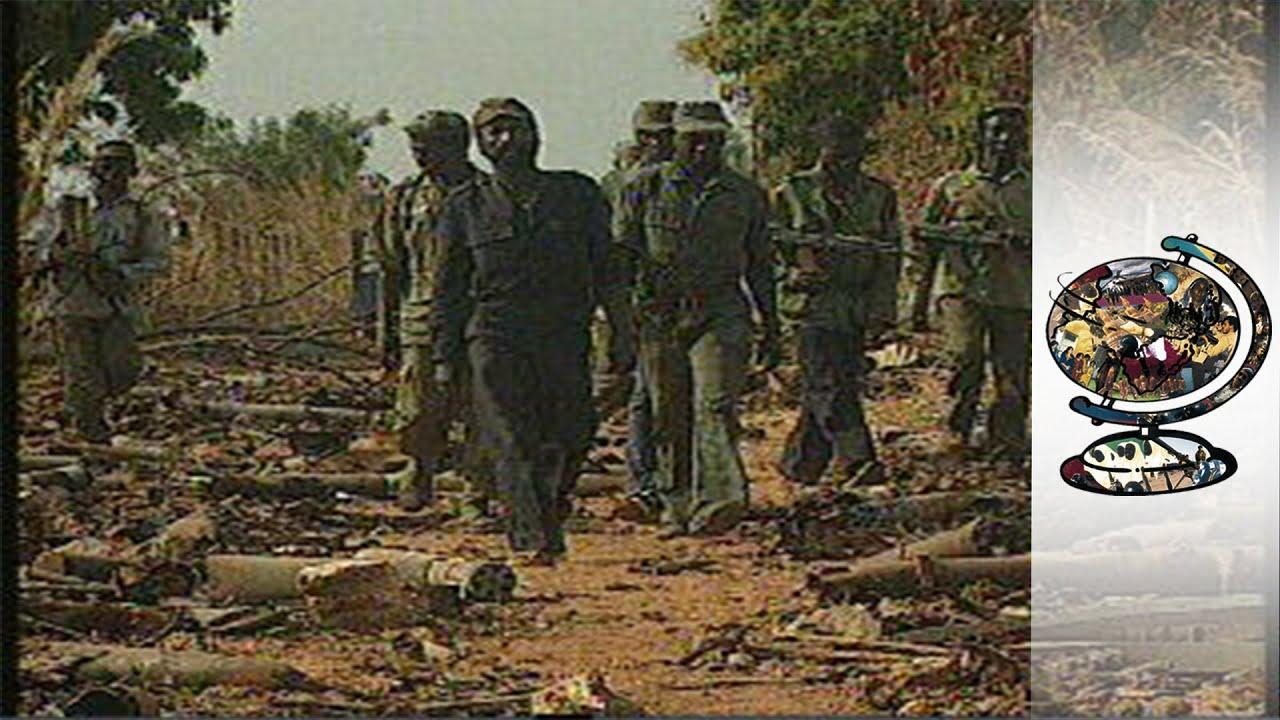
Outbreak of Guinea-Bissau's Civil War
Guinea Bissau

Politics
Military Conflict
4 min read
Updated By: History Editorial Network (HEN)
Published:
Updated:
On June 7, 1998, Guinea-Bissau was thrust into civil war when Brigadier-General Ansumane Mané led a military uprising against President João Bernardo Vieira. The immediate cause was Vieira’s decision to dismiss Mané, accusing him of smuggling arms to separatists in Senegal’s Casamance region. However, deeper tensions had been simmering for years due to corruption, authoritarian rule, and dissatisfaction within the military.
As the rebellion grew, government forces, backed by troops from Senegal and Guinea, attempted to crush the insurgency, but Mané’s forces controlled much of the country, including parts of the capital, Bissau. Heavy shelling devastated the city, and thousands of civilians fled to neighboring Senegal and Guinea-Bissau’s countryside. The conflict led to severe humanitarian consequences, with food shortages and infrastructure damage worsening daily.
International pressure mounted, and after months of intense fighting, a ceasefire was signed in November 1998, mediated by the Economic Community of West African States (ECOWAS) and the Community of Portuguese Language Countries (CPLP). The peace agreement led to a power-sharing arrangement, but tensions remained unresolved. In May 1999, Mané’s forces finally overthrew Vieira, bringing an end to the civil war.
The Guinea-Bissau Civil War of 1998-1999 exposed deep-seated political and military divisions, showing the fragility of governance in the country. Though the war officially ended in 1999, instability and coups would continue to shape Guinea-Bissau’s future.
#MomentsOfLife #MoofLife #GuineaBissau #CivilWar #WestAfrica #History
#Mooflife #Mof #MomentOfLife #Guinea-bissau #CivilWar #EconomicImpact #PoliticalInstability #Poverty

Explore the Life Moments of
 AI Twin