Nepal-Tibet Himalayan Flash Flood: More Than 750 Killed After Langtang Glacier Collapse
Langtang Lirung, Langtang region and Bhote Koshi-Trishuli river corridor, Nepal, extending into the Gyirong border region of the Tibet

Natural disaster
10 min read
Updated By: History Editorial Network (HEN)
Published:
Updated:
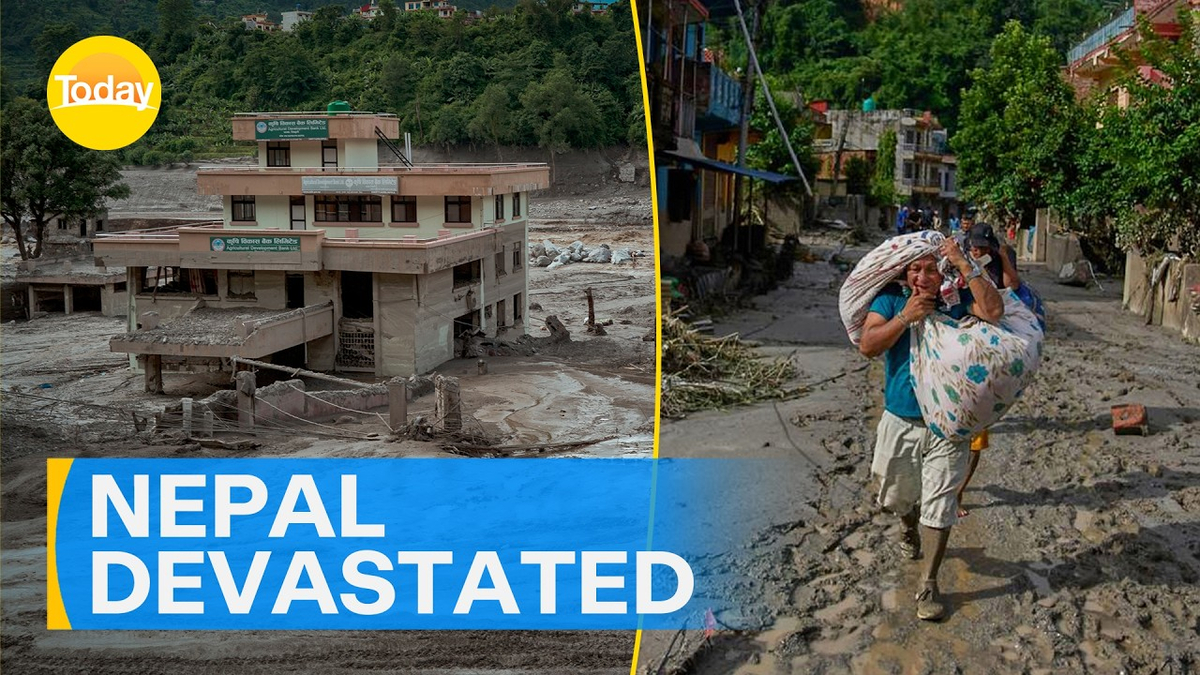
The 26/08/2026 Nepal-Tibet Himalayan flash flood has become one of the world's deadliest recorded glacier-related disasters, with at least 750 people confirmed dead and 3,044 still missing across Nepal and the Tibet Autonomous Region as of 30/08/2026. Nepal's disaster authority reported 734 deaths and 2,498 missing people, while authorities in Tibet reported 16 deaths and 546 missing in Gyirong County. Nepal also reported 7,514 people rescued.
The disaster began on the morning of 26/08/2026 when a huge mass of ice and rock collapsed from the Langtang Lirung area of the Himalayas. The collapse generated a seismic signal equivalent to a magnitude 5.2 earthquake, leading to initial reports that an earthquake had occurred. Subsequent scientific analysis indicated that the seismic energy came from the enormous ice-and-rock avalanche itself. The collapsing material plunged into the Lhende Khola valley and initiated a destructive cascade involving ice, rock, water, mud and debris. Researchers have described the event as a complex cascading hazard rather than a conventional earthquake or rainfall flood.
The resulting flood travelled through the Bhote Koshi and Trishuli river corridors, destroying settlements, roads, bridges and hydropower infrastructure. More than 90,000 people have been affected. The torrent also devastated the Gyirong border area in Tibet, an important crossing between China and Nepal. Bodies believed to have been carried downstream by the flood have been recovered far from the original disaster zone, while search teams have continued examining riverbanks, debris fields and damaged settlements.
The scale of the missing-person crisis remains particularly severe in Nepal. Of the 2,498 people listed as missing there, 933 are associated with hydropower projects. The disaster struck a corridor containing multiple power facilities, leaving workers isolated or trapped as water and debris overwhelmed access routes and tunnel entrances. Nepalese authorities have consequently made tunnel rescue one of the central components of the emergency response.
Hundreds of international visitors were also caught in the disaster zone. On the Tibetan side alone, Chinese authorities reported 261 missing foreign nationals from 23 countries. The largest identified groups were 104 Nepalese, 49 Indians, 33 Latvians, 18 Americans and 15 British citizens. Six Canadians and six Australians were also listed among those missing, along with smaller numbers from European, Asian and other countries. Many visitors in the region were tourists or pilgrims travelling through Tibet, including people associated with the Kailash Mansarovar pilgrimage.
The disaster's geological sequence is still being studied. Evidence indicates that rock and glacial ice detached high on Langtang Lirung and accelerated rapidly down the steep mountainside before entering the river valley. Scientists have examined whether the avalanche temporarily obstructed the Lhende Khola, creating a short-lived natural dam whose failure contributed to the downstream surge. Reports described an approximately nine-metre rise in the Trishuli River in affected areas.
Long-term Himalayan warming provides important context, although researchers have cautioned against attributing this individual collapse solely to climate change without further analysis. Glacier retreat, thinning ice and degrading mountain permafrost can reduce the stability of steep Himalayan slopes. Research cited after the disaster noted pronounced warming in the Langtang region and accelerating Himalayan ice loss since the beginning of this century. These processes can remove support formerly provided by glacier ice and expose fractured rock and steep slopes to additional instability.
Rescue operations have meanwhile become a race to reach workers trapped or feared trapped inside hydropower tunnels. At the Trishuli-3A Hydropower Project, an 82-member joint security team involving the Nepali Army, Armed Police Force and Nepal Police worked to clear mud, rock and debris from the tunnel area. An 11-member Indian team containing medical personnel and tunnel-rescue specialists also reached the affected region to provide technical assistance.
By 30/08/2026, rescuers had drilled five openings in an attempt to establish access and send air into the Trishuli-3A tunnel. Engineers were using excavators to locate the tunnel structure beneath debris, while rescue specialists prepared to enter if an opening large enough for personnel could be created. Nepal Electricity Authority officials estimated that approximately 40 to 42 technical personnel had been working on the underground powerhouse overhaul when they became trapped. Separately, more than 100 people were believed to be trapped at the Upper Trishuli-1 Hydropower Project, illustrating the extent to which several facilities were affected simultaneously.
#NepalFloods
#NepalTibetFloods
#LangtangLirung
#HimalayanDisaster
#GlacierCollapse
#FlashFlood
#TrishuliRiver
#NaturalDisasters

Explore the Life Moments of
 AI Twin