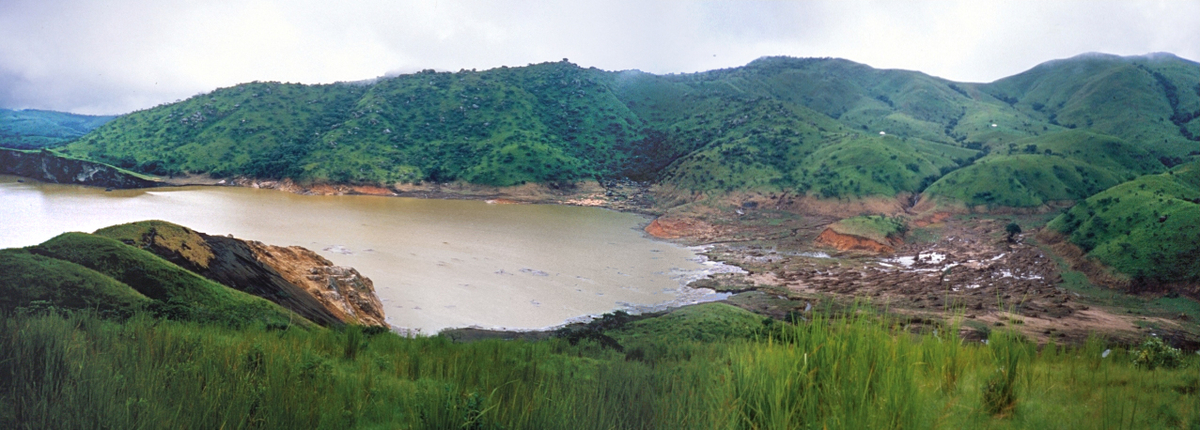
Lake Nyos disaster in Cameroon
Environmental Disaster
Public Health
Geological Events
2 min read
Updated By: History Editorial Network (HEN)
Published:
Updated:
The Lake Nyos disaster in Cameroon is one of the most catastrophic natural events in recorded history, primarily caused by a sudden release of carbon dioxide from the lake. Lake Nyos, a crater lake situated in the Northwest Region of Cameroon, had been accumulating carbon dioxide from volcanic activity beneath its surface. This gas, being heavier than air, formed a layer at the bottom of the lake. Over time, the pressure from the accumulated gas increased until it reached a critical point, leading to a violent release of carbon dioxide. This event resulted in a dense cloud of gas that flowed down the slopes surrounding the lake, displacing oxygen in the air and suffocating the inhabitants of nearby villages. The immediate impact was devastating, with 1,744 confirmed deaths and many more affected by the toxic gas. The disaster highlighted the dangers posed by volcanic lakes and the need for monitoring such natural phenomena to prevent future tragedies.
#mooflife
#MomentOfLife
#LakeNyos
#Disaster
#Cameroon
#CarbonDioxide
#VolcanicActivity

Explore the Life Moments of
 AI Twin