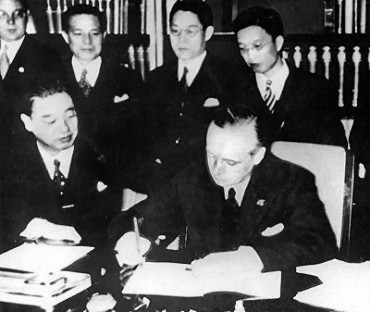
Nazi Germany and Imperial Japan join forces against communism in Anti-Comintern Pact.
Germany

Political
3 min read
Updated By: History Editorial Network (HEN)
Published:
In the mid-1930s, Nazi Germany and Imperial Japan formed a strategic alliance known as the Anti-Comintern Pact. This treaty was a response to the perceived threat of communism and sought to counter the influence of the Soviet Union.
The background of the pact lies in the shared ideological opposition to communism by both Germany under Adolf Hitler and Japan under Emperor Hirohito. The signing of the Anti-Comintern Pact served as a demonstration of solidarity between the two nations and laid the groundwork for future cooperation.
The impact of this alliance was significant as it marked a shift in international relations and set the stage for future military collaboration between Germany and Japan during World War II. The pact also paved the way for the Tripartite Pact, which included Italy and further solidified the Axis powers.
The Anti-Comintern Pact underscored the growing power and influence of both Nazi Germany and Imperial Japan on the world stage. It foreshadowed the aggression and expansionist policies that would define their actions in the years to come.
#NaziGermany #ImperialJapan #AntiCominternPact #WorldWarII #AxisPowers
Primary Reference
Nazi Germany, Imperial Japan, and the Anti-Comintern Pact | The ...

Explore the Life Moments of
 AI Twin