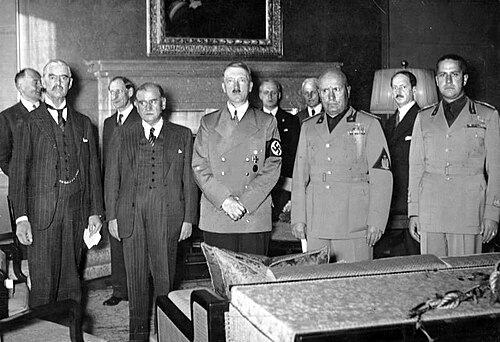
Munich Agreement: Czechoslovakia loses Sudetenland to Nazi Germany, impacting military defense positions.
Germany
Political
Global Trade
3 min read
Updated By: History Editorial Network (HEN)
Published:
Amid rising tensions in Europe, Germany, Italy, Great Britain, and France reached the Munich agreement, compelling Czechoslovakia to surrender the Sudetenland to Germany. The Sudetenland, home to a significant German-speaking population, housed crucial Czechoslovak military defense positions.
The agreement was seen as a diplomatic effort to appease Adolf Hitler's expansionist ambitions, avoiding the outbreak of war. The Czechoslovak government, excluded from the negotiations, reluctantly accepted the terms under pressure from the Allied powers.
The Munich agreement marked a significant concession by the Western powers towards Hitler's aggressive territorial demands, undermining Czechoslovakia's sovereignty. It emboldened Germany to pursue further expansionist policies, leading to the eventual occupation of Czechoslovakia and setting the stage for World War II.
The forced transfer of the Sudetenland weakened Czechoslovakia's defense capabilities, exposing the country to further aggression. The Munich agreement highlighted the failure of appeasement in preventing Nazi aggression and underscored the limitations of diplomatic negotiations with a power intent on expansion.
#MunichAgreement #Czechoslovakia #GermanExpansion #Appeasement #WorldWarII
Primary Reference
World War II Dates and Timeline

Explore the Life Moments of
 AI Twin