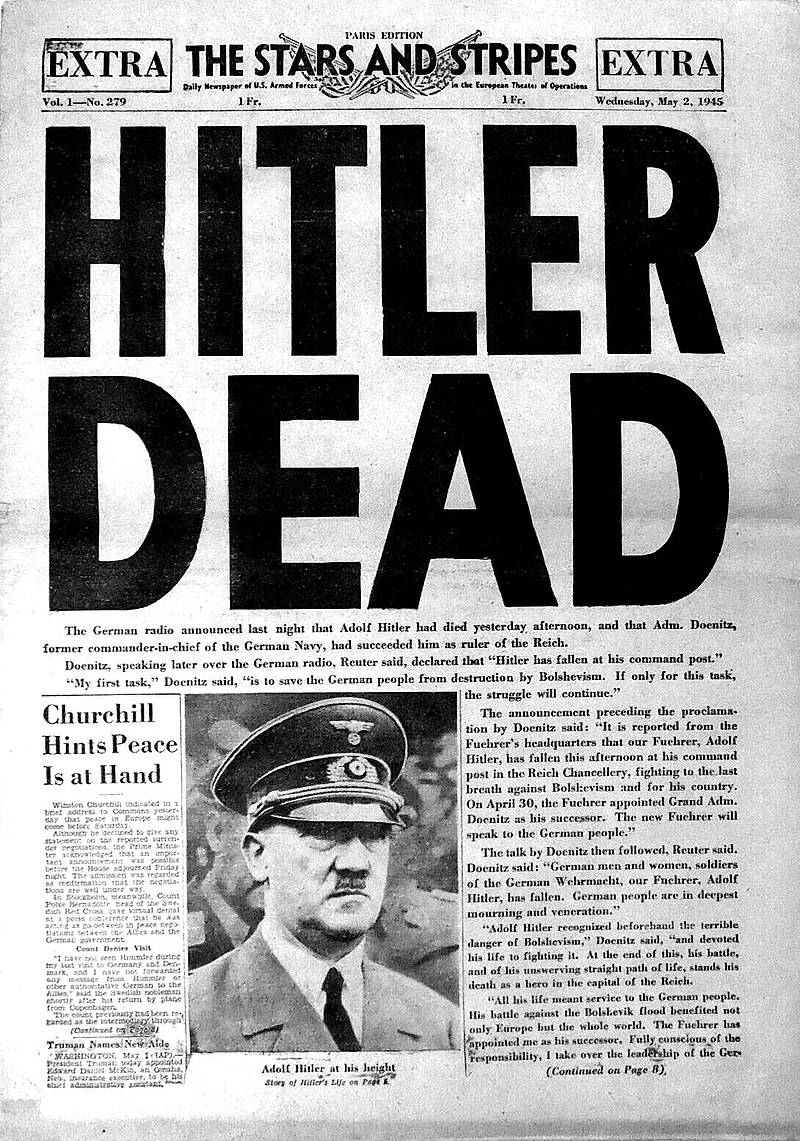
Hitler's suicide follows Germany's defeat, leading to the division of occupation zones by Allies.
Germany

Political
War
3 min read
Updated By: History Editorial Network (HEN)
Published:
Updated:
As the Allied forces closed in on Germany during World War II, Adolf Hitler, the leader of the country, realized defeat was imminent. In the face of the advancing troops, Hitler chose to end his life in his underground bunker in Berlin. With his death, Germany's surrender became evident. The Allies, including the United States, the Soviet Union, Britain, and France, took control of Germany and divided it into four occupation zones, each governed by one of the major Allied powers.
The consequences of Hitler's suicide and Germany's defeat were profound. The country was left devastated, both economically and emotionally, after years of war and destruction. The division of Germany into occupation zones marked the beginning of the post-war era, which brought about significant political and social changes in the country. The Allies were faced with the challenge of overseeing the rebuilding and recovery of Germany while also addressing issues of denazification and ensuring stability in the region.
The event of Germany's defeat and Hitler's suicide serves as a poignant reminder of the consequences of war and the importance of international cooperation in rebuilding nations and ensuring lasting peace.
#Germany #WorldWarII #Allies #OccupationZones #Hitler #DividedGermany
Primary Reference
Germany profile - Timeline - BBC News

Explore the Life Moments of
 AI Twin