Patton leads Operation Torch in North Africa
Casablanca, Safi, and Port Lyautey, Morocco
Military History
World War II
Leadership and Strategy
4 min read
Updated By: History Editorial Network (HEN)
Published:
Updated:
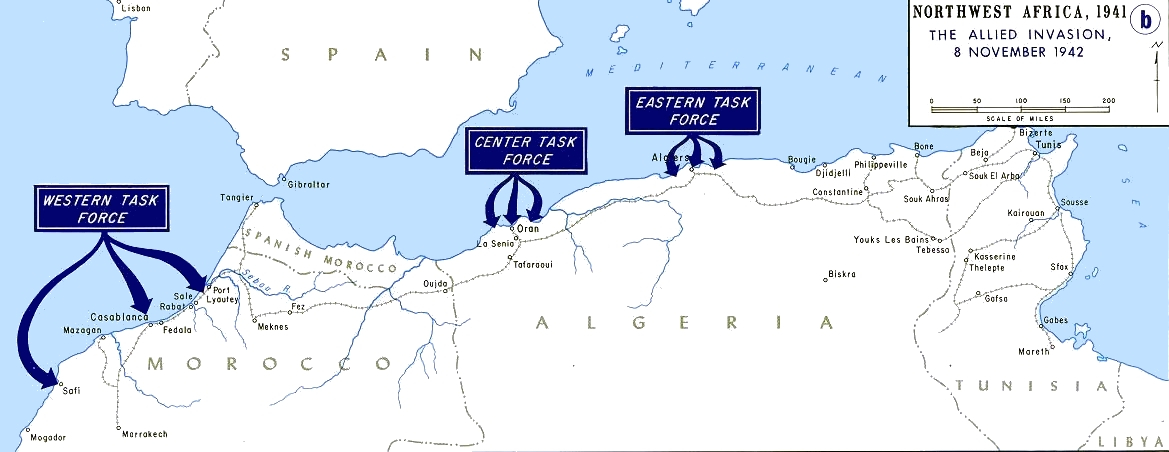
In 1942, forces under Major General George S. Patton Jr. landed along the Atlantic coast of Morocco as part of Operation Torch, the first large scale joint U.S. British invasion of North Africa. Patton commanded the Western Task Force, which sailed directly from the United States and conducted amphibious assaults near Casablanca, Safi, and Port Lyautey. The operation required coordination between U.S. Army ground units and U.S. Navy naval support, while British forces simultaneously landed farther east near Oran and Algiers.
The landings encountered resistance from Vichy French coastal defenses, naval vessels, and ground forces. Rough surf conditions complicated unloading operations, particularly for follow on armored units and supplies. Despite these challenges, U.S. forces secured initial beachheads on 08 November and expanded inland over the following days. At Safi, the capture of port facilities allowed tanks to be landed to support the advance toward Casablanca. At Port Lyautey, American troops fought to secure the nearby airfield, while naval gunfire supported the approach to Casablanca.
Fighting around Casablanca continued until French forces agreed to a ceasefire on 11/11/1942. The successful establishment of the Moroccan lodgment provided the Allies with a major foothold in North Africa and enabled the buildup of forces for subsequent operations against Axis troops in Tunisia. Patton remained in Morocco overseeing consolidation and preparation for continued Allied operations in the Mediterranean theater.
#mooflife
#MomentOfLife
#DwightD.Eisenhower
#GeorgeS.Patton
#OperationTorch
#Casablanca
#VichyFrance
#AlliedInvasion
#MilitaryStrategy
#NorthAfricaCampaign
#Armistice
#CasablancaConference
Primary Reference
World War II: General George S. Patton

Explore the Life Moments of
 AI Twin