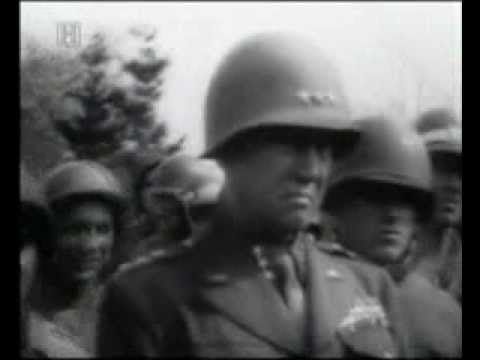
Liberation of Ohrdruf Concentration Camp
Ohrdruf, Thuringia, Germany
World War II
Human Rights
4 min read
Updated By: History Editorial Network (HEN)
Published:
Updated:
On 12/04/1945, Generals Dwight D. Eisenhower, George S. Patton, and Omar Bradley visited the Ohrdruf concentration camp in Thuringia, Germany, shortly after its liberation by elements of the U.S. 4th Armored Division and 89th Infantry Division. Ohrdruf was a subcamp of the Buchenwald concentration camp complex and was the first Nazi concentration camp liberated by U.S. forces. When Allied troops entered the site in early April 1945, they found evidence of forced labor, starvation, and the killing of prisoners, including bodies left unburied and signs of executions carried out as German forces withdrew.
During the 12 April inspection, Eisenhower requested that senior commanders and members of Congress later visit the camp to witness conditions firsthand. Patton and Bradley accompanied him as the group walked through the grounds, observed burial sites, and viewed the remains of prisoners. Accounts from the visit recorded that Patton became physically ill and stepped away during the inspection, while Eisenhower emphasized the importance of documenting what had been found. Photographs and film footage were taken, and the visit contributed to Allied efforts to record evidence of Nazi crimes for historical and legal purposes.
The inspection at Ohrdruf occurred as Allied forces advanced deeper into central Germany during the final weeks of the European campaign. Eisenhower subsequently ordered additional visits by journalists, soldiers, and civilian representatives to ensure that the conditions discovered in liberated camps were widely documented. The visit by Eisenhower, Patton, and Bradley on 12 April 1945 became one of the earliest high level Allied inspections of a liberated concentration camp.
#Eisenhower
#Patton
#Ohrdruf
#CremationPyre
#RedArmy
#Berlin
#PrisonerOfWar
#OflagXiii-b
#CombatCommand
#GermanPrisoners
#MerkerSaltMine
#MilitaryStrategy
#HistoricalEvents
Primary Reference
American forces at Ohrdruf concentration camp

Explore the Life Moments of
 AI Twin