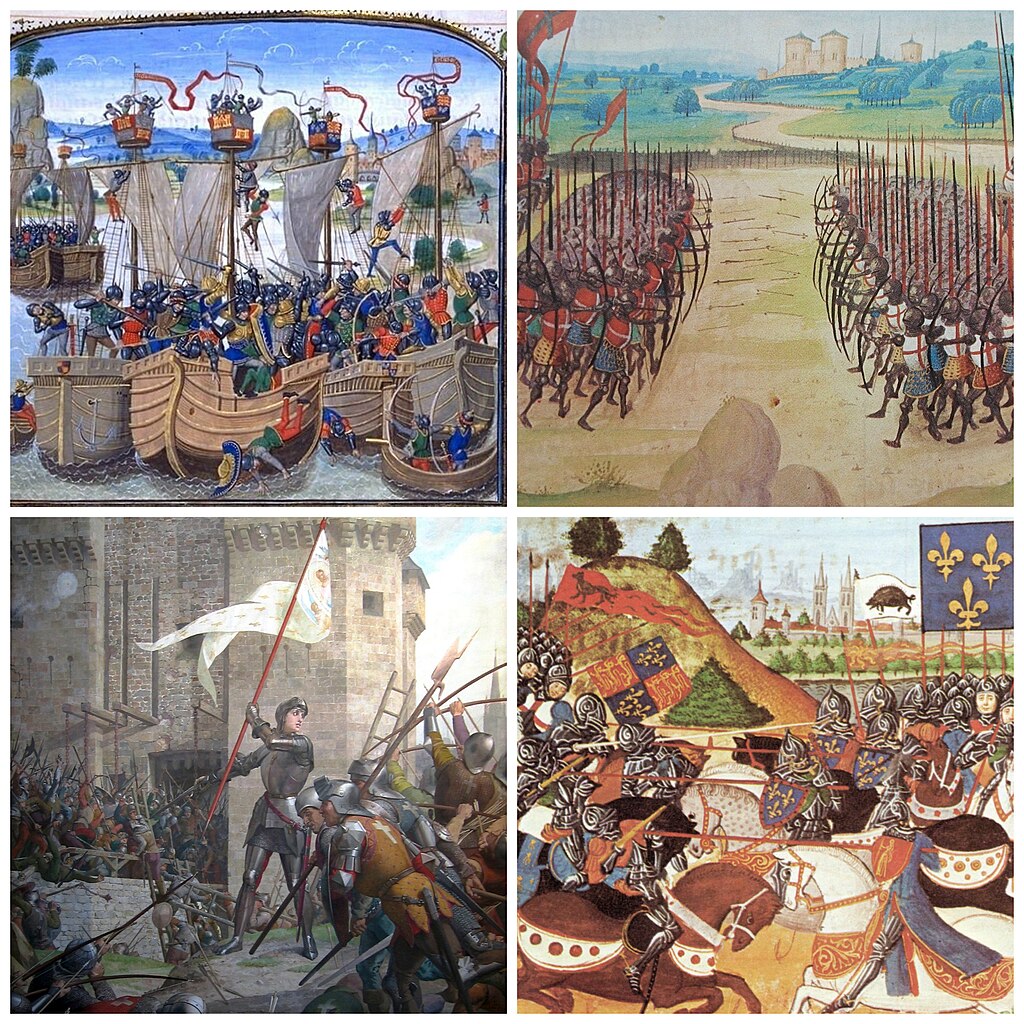
Start of the Hundred Years' War
France
Historical Conflicts
Medieval History
Monarchical Disputes
4 min read
Updated By: History Editorial Network (HEN)
Published:
Updated:
The Hundred Years' War was a protracted conflict between England and France, primarily driven by territorial disputes and claims to the French throne. The war's origins can be traced back to a succession crisis in France, where the House of Valois and Edward III of England, a member of the Plantagenet dynasty, contested the legitimacy of the French crown. Edward III asserted his claim based on his lineage, as he was the son of Isabella of France, the daughter of the previous French king. This familial connection positioned him as a legitimate contender for the throne, igniting tensions between the two houses. The conflict was marked by a series of battles, political maneuvers, and shifting alliances, which would ultimately shape the future of both nations.
The impact of the Hundred Years' War was profound, leading to significant changes in the political landscape of medieval Europe. The war saw the rise of national identities, particularly in England and France, as both sides rallied their populations around the cause of their respective monarchs. The conflict also introduced new military strategies and technologies, including the use of longbows by English archers, which played a crucial role in several key battles. The war resulted in substantial loss of life and economic strain on both countries, with estimates suggesting that millions were affected by the fighting and its aftermath. Ultimately, the Hundred Years' War concluded with the expulsion of English forces from most of France, solidifying the Valois dynasty's control and altering the course of European history.
#mooflife
#MomentOfLife
#HundredYears'War
#EdwardIii
#HouseOfValois
#FrenchThrone
#MedievalConflict
Primary Reference
Hundred Years' War

Explore the Life Moments of
 AI Twin