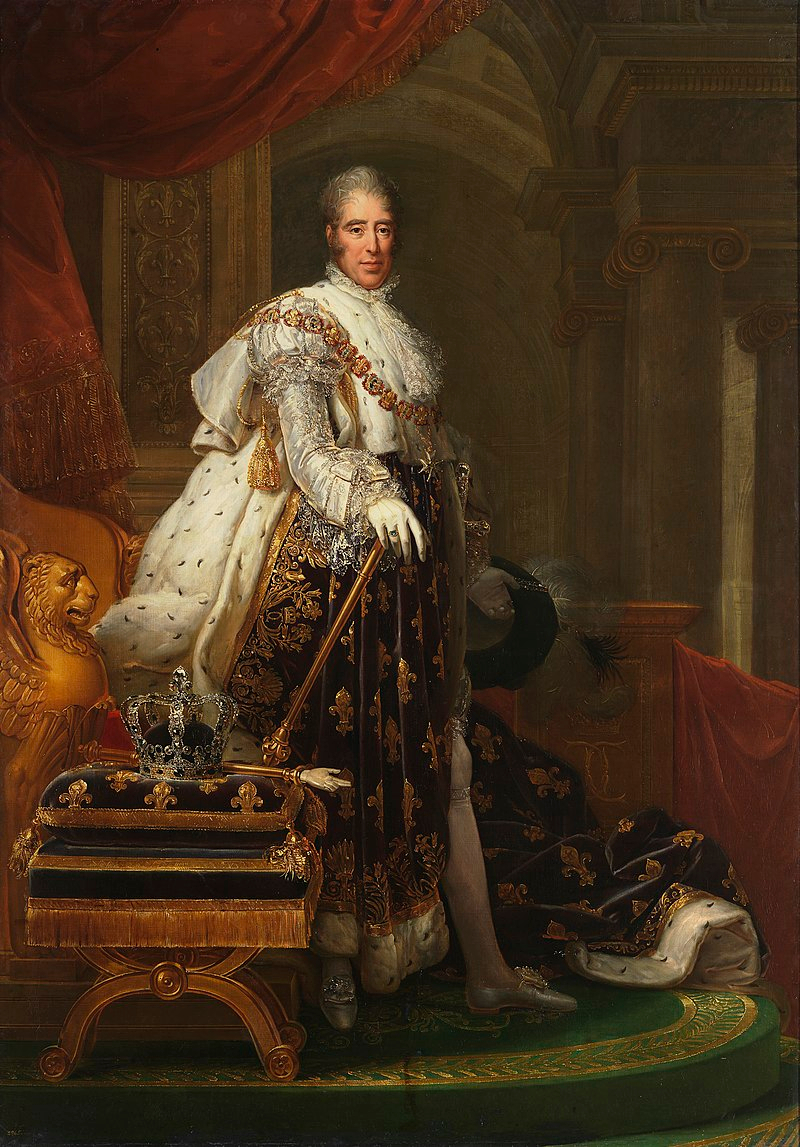
Charles X's Reign and Abdication
France
Monarchy
France
4 min read
Updated By: History Editorial Network (HEN)
Published:
Updated:
Charles X ascended to the throne as the King of France, following the death of his brother, Louis XVIII. His reign was marked by a strong inclination towards the Ultra-royalist ideology, which sought to restore the traditional monarchy and the principles of the Ancien Régime. This approach was characterized by a series of policies that aimed to strengthen the power of the monarchy and diminish the influence of liberal and revolutionary movements that had gained traction in France. Charles X's government implemented measures that were perceived as repressive, including censorship of the press and restrictions on civil liberties, which led to widespread discontent among the populace. The political climate during his reign was increasingly polarized, with growing opposition from liberal factions and the middle class, who were advocating for constitutional reforms and greater political representation.
The culmination of this unrest was the July Revolution, which erupted as a response to Charles X's increasingly autocratic rule. The revolution was fueled by a combination of economic hardship, dissatisfaction with the monarchy, and a desire for democratic reforms. As the situation escalated, Charles X was forced to abdicate the throne in favor of his grandson, Henry. This abdication marked the end of the Bourbon restoration and led to the establishment of a constitutional monarchy in France. The impact of Charles X's reign and subsequent abdication was profound, as it not only signified the decline of absolute monarchy in France but also set the stage for future political developments, including the rise of republicanism and the eventual establishment of the Second Republic.
#mooflife
#MomentOfLife
#CharlesX
#FrenchMonarchy
#JulyRevolution
#Ultra-royalists
#BourbonRestoration
Primary Reference
Charles X of France

Explore the Life Moments of
 AI Twin