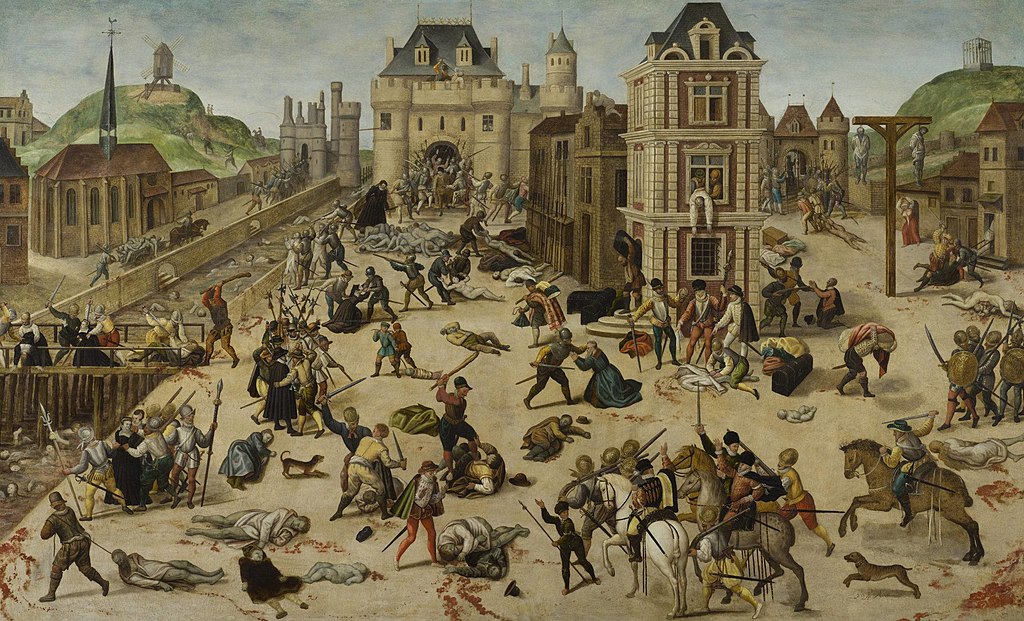
St. Bartholomew's Day massacre
France

Religious Conflict
Huguenots
Catholic Mob Violence
3 min read
Updated By: History Editorial Network (HEN)
Published:
The St. Bartholomew's Day Massacre unfolded in Paris, targeting Huguenots, leading to thousands of deaths in a wave of Catholic mob violence and targeted assassinations. The conflict stemmed from religious tensions between Catholics and Huguenots in France during the Wars of Religion. The spark for the massacre was the marriage between a prominent Huguenot leader, Henry of Navarre, and a Catholic princess, which led to a fragile truce shattered by political maneuvers. The violence quickly spread from Paris to other cities.
The impact of the massacre was devastating, with estimates ranging from 5,000 to 25,000 deaths in Paris alone. The event polarized French society and ignited further religious conflict, marking a dark chapter in the country's history. The massacre also had repercussions beyond France, sparking outrage and fear among Protestant communities in Europe. The atrocity left a deep scar on the social and political fabric of France, leading to continued strife and divisions for years to come.
#ReligiousConflict #Huguenots #CatholicMobViolence

Explore the Life Moments of
 AI Twin