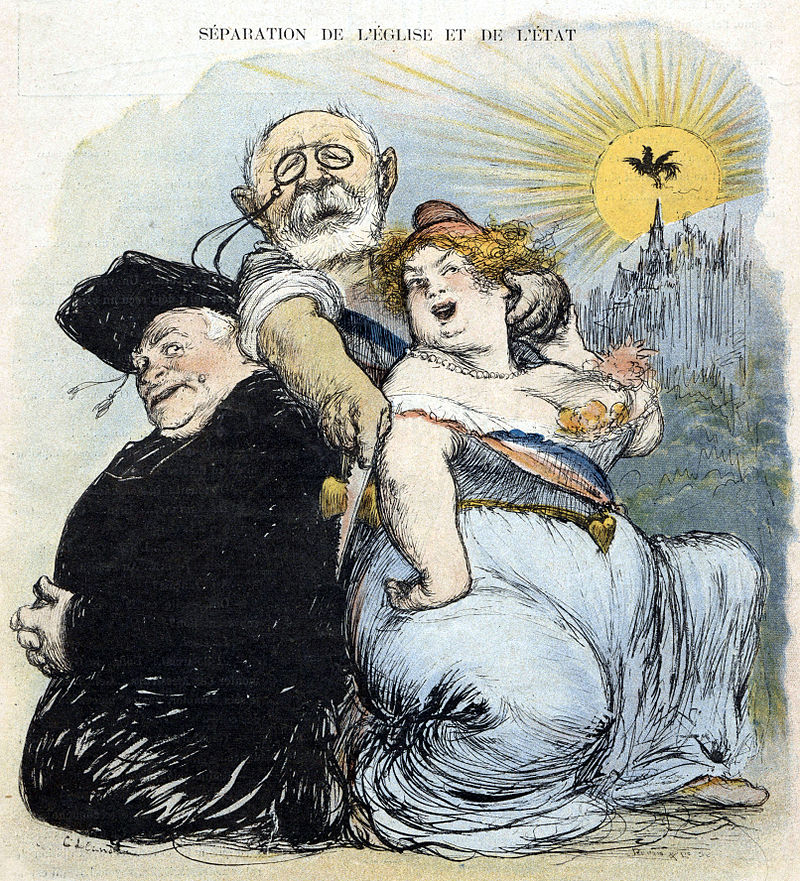
Effect of 1905 Law on Church-State Separation in France
France

Political
Religion
3 min read
Updated By: History Editorial Network (HEN)
Published:
In 1905, the French government passed a law that terminated state financial support to religious organizations. This law marked a critical turning point in French history, separating the Church from the State. The decision was a result of longstanding tensions between the Catholic Church and the secular government. The law aimed to promote the principles of secularism and equality in France by disentangling religious institutions from state influence.
By ending government funding of religious groups, the law aimed to assert the authority of the state over religious matters and promote neutrality in religious affairs. It had a profound impact on the relationship between the church and the government, leading to a significant reduction in the power and influence of the Catholic Church in French society.
The 1905 French law on the separation of Church and State continues to shape the landscape of religious freedom and state secularism in France today. It serves as a cornerstone of French secularism and remains a crucial element of the country's constitutional framework. The law exemplifies France's commitment to safeguarding the principles of secularism and upholding the separation of church and state.
#France #Secularism #ReligiousFreedom.

Explore the Life Moments of
 AI Twin