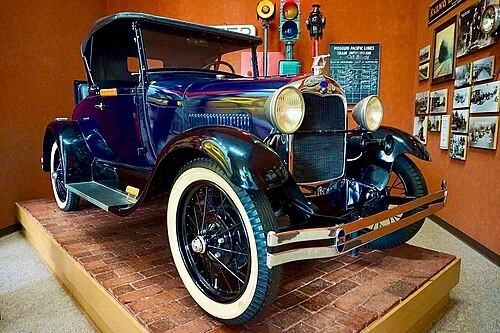
Model T production ends after more than 15 million units sold; Model A launched.
Dearborn, Michigan, United States
Product Launch
6 min read
Updated By: History Editorial Network (HEN)
Published:
Updated:
On 02/12/1927, the Ford Motor Company officially launched the Model A, introducing an entirely new automobile line after ending production of the Model T earlier that year. The transition marked one of the most significant product changes in the company's history. After nearly two decades of manufacturing the Model T, which had sold more than 15 million units worldwide, Ford halted production in May 1927 and temporarily shut down factories to redesign equipment, modernize production facilities, and prepare for a successor vehicle.
The decision carried considerable risk. The Model T had dominated automobile sales for years and had become synonymous with affordable personal transportation. However, by the mid-1920s, consumer preferences were changing. Competitors such as General Motors were offering vehicles with more modern styling, greater comfort, and additional features. Henry Ford ultimately concluded that a completely new model was necessary rather than continuing to update the aging Model T platform.
During the months between the end of Model T production and the launch of the Model A, Ford undertook an extensive factory retooling program. Production facilities across the company's manufacturing network were modified to accommodate new engineering designs and assembly processes. The investment represented a major commitment of resources, as Ford temporarily sacrificed production volume and revenue while preparing the new vehicle for market introduction.
The Model A featured numerous improvements over its predecessor. It was equipped with a 3.3-liter four-cylinder engine producing approximately 40 horsepower, significantly more than the Model T. The vehicle included modern controls familiar to contemporary drivers, improved braking systems, enhanced styling, and a wider range of body configurations. Customer response was immediate, with strong demand and large numbers of advance orders demonstrating public interest in Ford's new offering.
By the end of its production run in 1931, nearly 4.9 million Model A vehicles had been manufactured. The successful launch helped Ford remain a leading force in the automotive industry during a period of increasing competition and rapidly evolving consumer expectations. The Model A became the company's bridge between the pioneering era of the Model T and the more modern automobile designs that would define the following decades.
Why This Moment Matters:
The launch of the Model A represented Ford's willingness to replace its most successful product in response to changing market conditions. Rather than relying indefinitely on the Model T's legacy, the company undertook a costly and complex transition that demonstrated the importance of innovation and adaptation in a growing automobile industry. The success of the Model A validated Ford's decision to modernize its product lineup and manufacturing operations.
#FordModelA
#FordMotorCompany
#HenryFord
#AutomotiveHistory
Primary Reference
December 2, 1927: Henry Ford Introduces the Model A

Explore the Life Moments of
 AI Twin