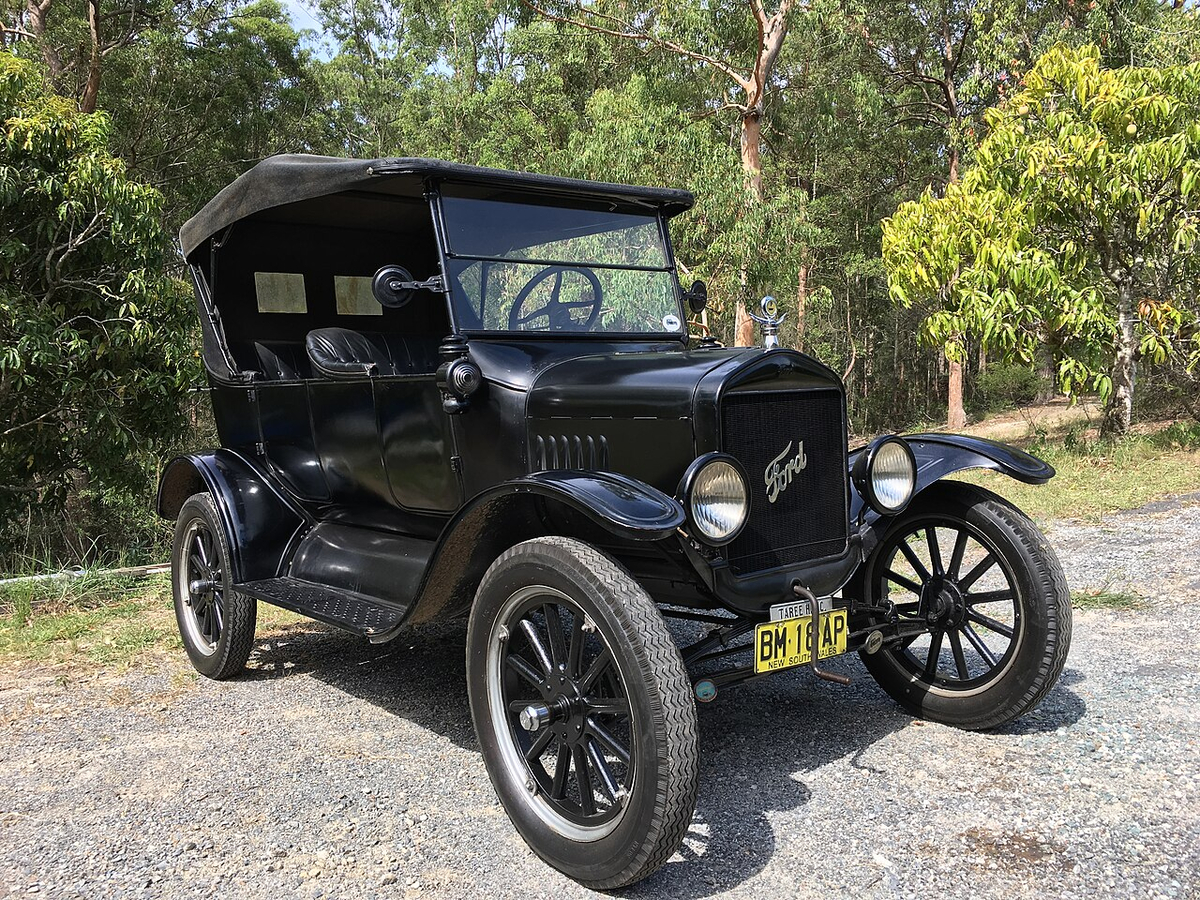
Model T introduced, revolutionizing personal transportation.
Detroit, Michigan, United States
Industrial History
Technology History
6 min read
Updated By: History Editorial Network (HEN)
Published:
Updated:
On 01/10/1908, the Ford Motor Company introduced the Model T, a vehicle that became one of the most influential automobiles in history. Unveiled at Ford's Piquette Avenue Plant in Detroit, Michigan, the Model T was designed to be practical, durable, and affordable for ordinary consumers. At a time when automobiles were often considered luxury items, Henry Ford's new car aimed to reach a much broader market, helping to expand personal transportation beyond wealthy buyers.
The Model T featured a 20-horsepower four-cylinder engine, a lightweight yet sturdy vanadium steel construction, and a design capable of handling the rough roads common in the early twentieth century. The first Model Ts sold for prices ranging from $825 to $850 depending on configuration, making them less expensive than many competing automobiles. Ford's emphasis on simplicity and reliability quickly attracted customers across the United States and abroad.
Production of the Model T increased dramatically in the years following its introduction. Ford continuously refined manufacturing methods, culminating in the adoption of the moving assembly line in 1913 at the Highland Park Plant. This innovation significantly reduced assembly time and production costs, allowing Ford to lower vehicle prices while increasing output. By the early 1920s, millions of Model Ts had been sold, and the automobile had become a familiar part of everyday life for families, farmers, and businesses.
The Model T's widespread availability contributed to major changes in transportation patterns during the twentieth century. As automobile ownership expanded, reliance on horse-drawn transportation steadily declined in many communities. The vehicle enabled greater personal mobility, supported the growth of road infrastructure, and encouraged the development of related industries such as fuel distribution, roadside services, and automobile manufacturing. By the end of production in 1927, more than 15 million Model Ts had been built, a record for a single automobile model that stood for decades.
Why This Moment Matters:
The introduction of the Model T marked the beginning of large-scale automobile ownership for many consumers. Rather than serving a small affluent market, Ford focused on producing a vehicle that average families could afford and maintain. The Model T's combination of durability, accessibility, and mass production helped establish the automobile as a practical form of transportation across much of the world.
#FordInnovation
#AutomotiveRevolution
#HenryFord
#TransportationHistory
Primary Reference
Ford Motor Company unveils the Model T

Explore the Life Moments of
 AI Twin