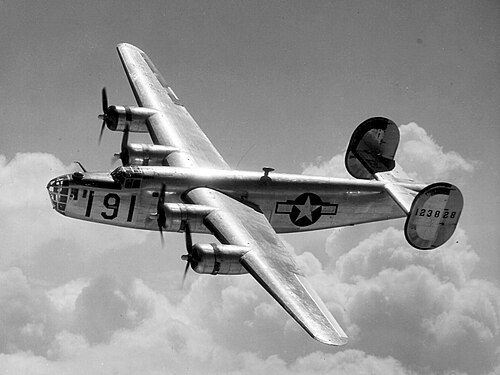
Begins production of military vehicles for WWII; Willow Run plant produces B-24 bombers.
Michigan, United States
Industrial History
6 min read
Updated By: History Editorial Network (HEN)
Published:
Updated:
In 1941, the Ford Motor Company began a major transition from civilian automobile production to wartime manufacturing as the United States intensified preparations for global conflict. Even before the country's formal entry into World War II in December 1941, Ford had started adapting its factories and production systems to support military needs. This shift positioned the company as one of the largest industrial contributors to the American war effort and a key component of what President Franklin D. Roosevelt called the "Arsenal of Democracy."
As wartime demands increased, Ford redirected significant manufacturing capacity away from consumer vehicles and toward military equipment. The company's facilities produced a wide range of products, including military trucks, tanks, aircraft engines, military vehicles, and other equipment needed by Allied forces. Ford's extensive manufacturing experience and expertise in mass production enabled the company to scale output rapidly to meet government contracts.
One of the most notable wartime projects was the Willow Run plant in Michigan, which was developed to produce Consolidated B-24 Liberator bombers. Construction of the facility began in 1941, and it later became one of the largest and most productive aircraft manufacturing operations in the world. At peak production, Willow Run was capable of completing B-24 bombers at an unprecedented rate, demonstrating how automotive assembly-line principles could be adapted for aircraft production.
During the war years, Ford manufactured thousands of military vehicles and supported the production of vast quantities of war materiel. The company's operations became part of a nationwide industrial mobilization involving automobile manufacturers, steel producers, aircraft builders, and countless suppliers. This coordinated effort provided equipment for American forces and Allied nations across multiple theaters of war.
The transition fundamentally altered Ford's operations throughout the conflict. Civilian automobile production was largely suspended following federal wartime restrictions, while factories focused on military contracts until the war ended. The experience also accelerated advances in large-scale manufacturing techniques, workforce organization, and industrial logistics that would influence postwar production.
Historical Significance:
Ford's wartime conversion illustrated the scale at which American industry could adapt to national needs during a period of global conflict. By applying mass-production expertise to military manufacturing, the company helped supply vehicles, aircraft, and equipment that supported Allied operations. The transformation of Ford's factories during 1941 became one of the most visible examples of industrial mobilization in the United States during World War II.
#WWIIProduction
#WillowRun
#B24Bomber
# ArsenalOfDemocracy
#IndustrialMight
Primary Reference
Ford Motor Company

Explore the Life Moments of
 AI Twin