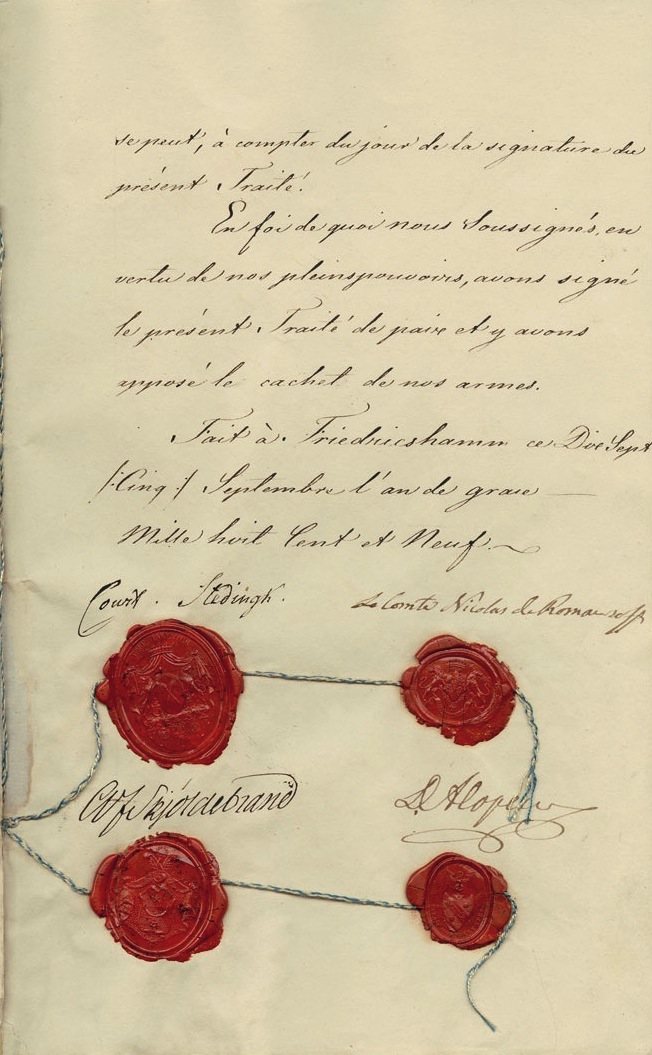
Treaty of Fredrikshamn: Finland ceded to Russia.
Finland

Political
4 min read
Updated By: History Editorial Network (HEN)
Published:
After a conflict between Sweden and Russia known as the Finnish War, the Treaty of Fredrikshamn was signed, resulting in Finland being ceded to Russia. The war began due to tensions over Finland's control between the two nations. The Finnish War saw battles fought on Finnish soil, leading to significant destruction and loss of life.
The Treaty of Fredrikshamn marked the end of Swedish control over Finland, which had been a part of the Swedish realm for centuries. With the signing of the treaty, Finland became an autonomous Grand Duchy under the Russian Empire, with its own government and laws. The Finnish people were allowed to retain their language, culture, and some degree of autonomy, although they were now subject to the authority of the Russian Tsar.
The cession of Finland to Russia had a lasting impact on the Finnish people, shaping their identity and national consciousness. Under Russian rule, Finland experienced periods of Russification policies aimed at assimilating the population into the Russian Empire. However, these efforts were met with resistance from the Finnish people, who sought to preserve their language, culture, and traditions.
The Treaty of Fredrikshamn reshaped the geopolitical landscape of Northern Europe, strengthening Russian influence in the region while weakening Sweden's position. The ceding of Finland to Russia marked the beginning of a new chapter in Finnish history, as the country navigated its relationship with its new imperial overlords.
#FinnishWar #TreatyofFredrikshamn #FinlandCeded #RussianEmpire #GeopoliticalShifts
Primary Reference
On This Day: Treaty of Fredrikshamn Signed 1809 | In Custodia Legis
Explore the Life Moments of
 AI Twin