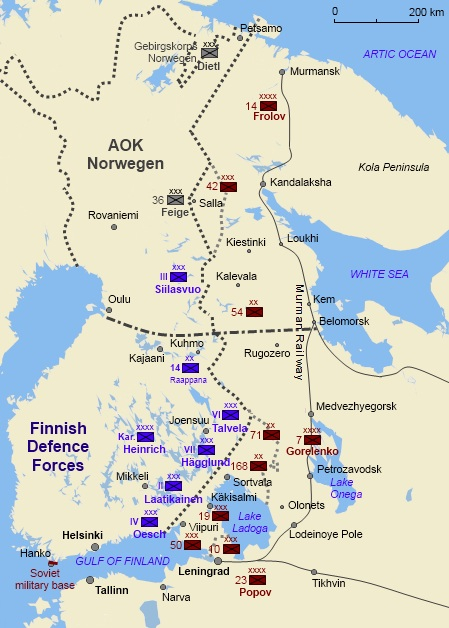
The Beginning of the Continuation War
Finland

Political
4 min read
Updated By: History Editorial Network (HEN)
Published:
In 1941, the Continuation War ensued between Finland and the Soviet Union. It was a sequel to the Winter War that took place in 1939-1940, where the Soviet Union invaded Finland but failed to achieve complete occupation. The seeds of animosity between the two nations stemmed from territorial disputes and Finland's refusal to give in to Soviet demands for border concessions.
During the Continuation War, Finland sought to reclaim territories lost in the Winter War and to secure its independence from Soviet influence. Despite Finland being technically allied with Nazi Germany during this conflict, its main objective was the preservation of its sovereignty. Finnish forces engaged in fierce battles with the Soviet army, showcasing remarkable resilience and military prowess despite being outnumbered and outgunned.
The war had devastating consequences for both sides, resulting in significant loss of life and destruction of infrastructure. Finland faced immense pressure due to the Soviet Union's vast resources and manpower. However, Finland's defensive tactics and knowledge of the terrain enabled them to hold off Soviet advances for an extended period.
The Continuation War came to an end in 1944 with the signing of the Moscow Armistice, where Finland had to cede more territory to the Soviet Union. Despite the territorial losses, Finland was able to maintain its independence and embark on the path to post-war reconstruction.
The impact of the Continuation War reverberated long after the conflict had ceased, shaping Finland's foreign policy and defense strategies for years to come. The war also left a deep imprint on the national psyche, fostering a sense of resilience and determination in the face of adversity.
#Finland #SovietUnion #ContinuationWar #TerritorialDisputes
Primary Reference
Continuation War - Wikipedia
Explore the Life Moments of
 AI Twin